

Key points in this article:
- B2B ecommerce involves transactions between businesses, while B2C ecommerce involves businesses selling products or services directly to individual consumers.
- The B2B sales cycle is typically longer because it involves multiple decision-makers, whereas B2C purchases are usually quicker and more straightforward.
- B2B transactions generally have higher order values and larger quantities, while B2C purchases tend to involve smaller orders for personal use.
- B2B marketing focuses on value, expertise, and long-term relationships, while B2C marketing often emphasizes branding, emotions, and promotional strategies.
- B2B ecommerce systems are usually more complex, often including custom pricing and negotiated terms, whereas B2C platforms prioritize simple pricing and fast checkout experiences.
Ecommerce has grown rapidly over the past decade, transforming how companies sell products and services around the world.
As more businesses move to the internet, choosing the right selling model has become an essential part of building a successful digital strategy.
Two of the most common approaches are B2B (business-to-business) ecommerce, where companies sell to other businesses, and B2C (business-to-consumer) ecommerce, where businesses sell directly to individual customers.
While both models rely on online transactions, they differ significantly in terms of buying behavior, sales processes, pricing strategies, and customer relationships.
Understanding these differences helps businesses design better marketing, sales, and customer experience strategies.
In this article, we’ll explore what B2B and B2C ecommerce are, the key differences between them, their similarities, and how businesses can choose the right approach.
What is B2B ecommerce?
Business-to-business (B2B) ecommerce: Online transactions where businesses sell products or services to other companies rather than individual consumers.
This type of commerce might entail, for instance, manufacturers selling directly to retailers through ordering portals on the internet.
Another example is wholesalers selling to distributors, where distributors log into an ecommerce platform to purchase inventory in large quantities for resale.
SaaS companies selling software subscriptions to businesses is also B2B ecommerce, with firms buying tools like accounting or websites for managing projects.
Specific examples of B2B ecommerce companies include the following:
- Salesforce: A platform that provides cloud-based CRM and business software subscriptions to organizations.
- Amazon Business: The B2B division of Amazon that supplies office products, industrial supplies, and equipment to companies.
- Grainger: An industrial supply company that sells tools, safety equipment, and maintenance products to businesses through its ecommerce platform.
- WiziShop: A SaaS ecommerce platform that provides businesses with tools to create and manage online stores, including website building, marketing features, and SEO support.
- Alibaba Group: A global B2B marketplace where manufacturers and wholesalers sell products in bulk to businesses around the world.
What is B2C ecommerce?
Business-to-consumer (B2C) ecommerce: Online transactions where businesses sell products or services directly to individual consumers.
Examples of B2C ecommerce include online clothing stores, where shoppers browse products, choose sizes, and purchase items through a website or app.
Electronics retailers also use this form of internet commerce by selling devices like smartphones, laptops, or accessories directly to consumers on the internet.
Another example is grocery delivery services, which allow customers to order food and household items from supermarkets for home delivery.
Here are some well-known names in B2C digital commerce:
- Amazon: One of the largest B2C ecommerce platforms where consumers can buy products like books, electronics, clothing, and household items directly on the web.
- Sézane: A fashion retailer that sells clothing and accessories directly to consumers via its website.
- Apple: A global company offering consumer electronics such as iPhones, MacBooks, and accessories through its ecommerce store.
- DoorDash: A web platform and mobile app that allows individual consumers to order food from local restaurants, which is then delivered directly to their homes.
- Walmart: A retail giant with a large internet marketplace where customers can purchase groceries, electronics, clothing, and everyday items.
8 Key differences between B2B and B2C ecommerce
1. Target audience
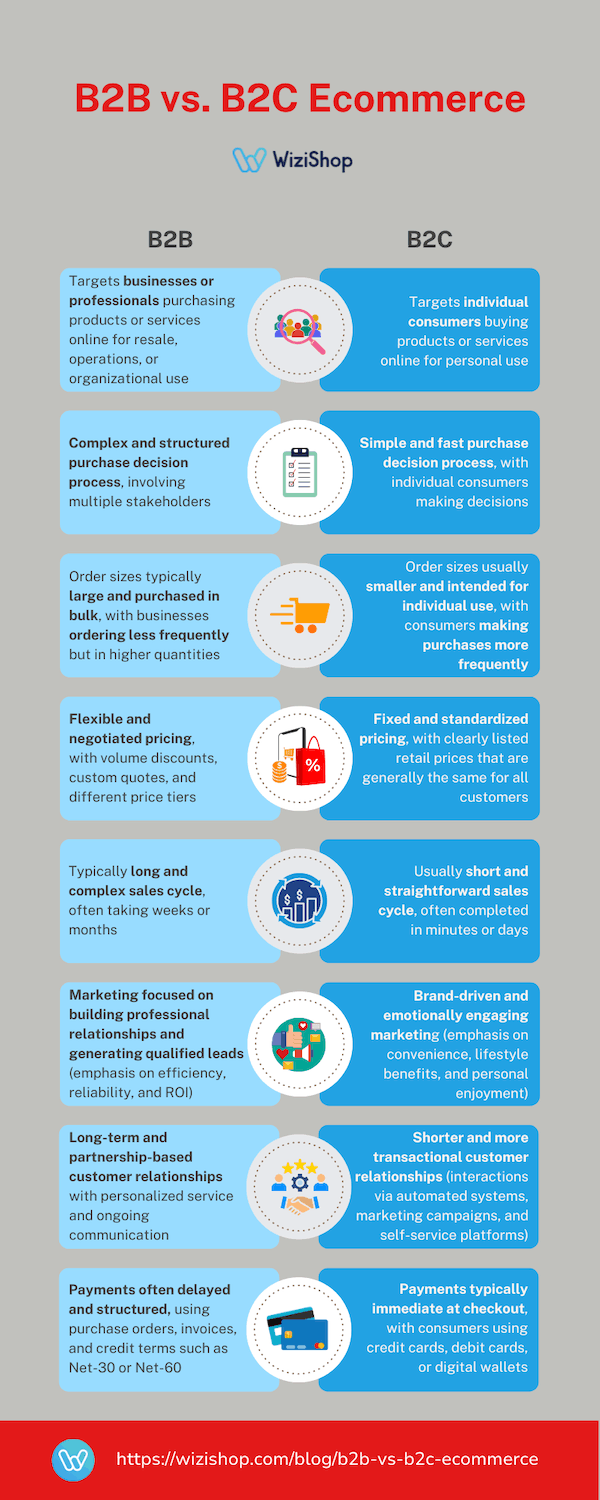
One of the top dissimilarities between B2B and B2C ecommerce is the groups of customers that companies wish to attract.
The target audience for B2B ecommerce consists of businesses, organizations, and professionals purchasing for operational needs, inventory, or services.
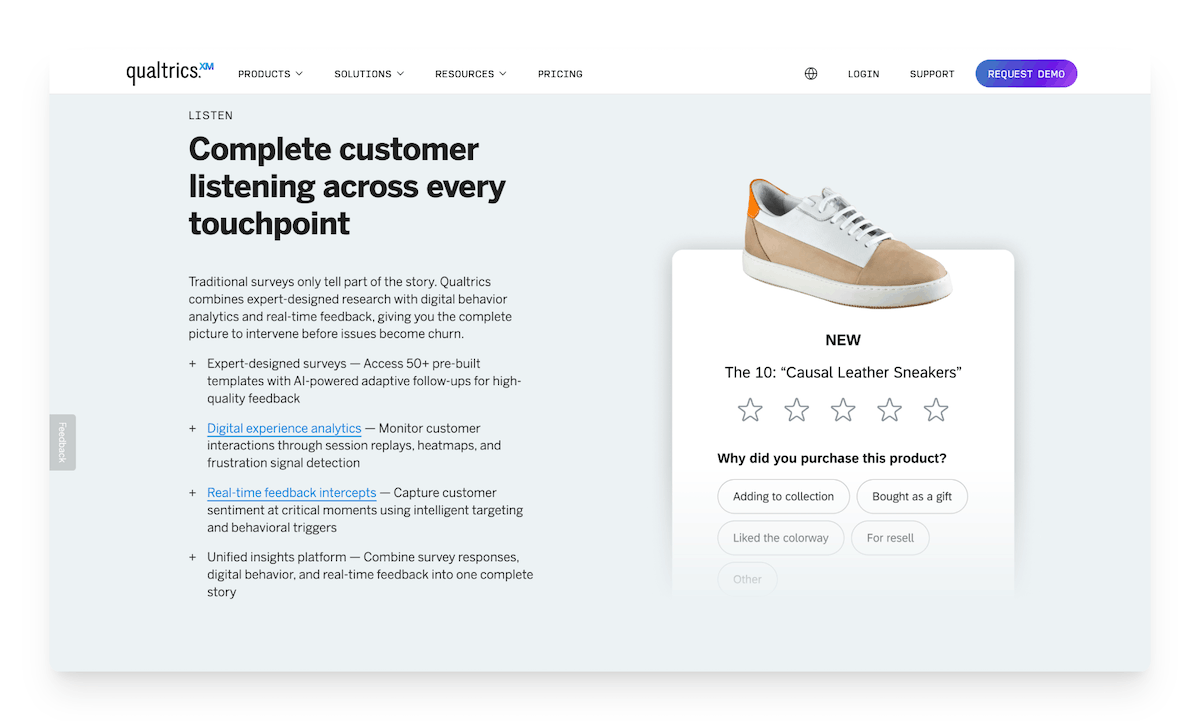
Qualtrics, a B2B cloud-based experience management platform that helps organizations collect, analyze, and act on customer, employee, product, and brand data
B2B companies focus on selling to specific business roles such as procurement managers, operations directors, or IT specialists. Buyers often focus on bulk orders, professional tools, software solutions, long-term contracts, cost efficiency, and ROI.
In contrast, B2C ecommerce targets broad consumer groups, appealing to individuals shopping for personal use. Purchases are typically smaller, driven by convenience, brand preference, or emotional appeal.

Retailer Farmacy Beauty selling skin care for individual consumers
2. Purchase decision process
Another major way that B2B and B2C forms of digital commerce differs is how customers make decisions.
The purchase decision process in B2B ecommerce is typically complex, involving multiple stakeholders such as managers, procurement teams, and department heads.
Businesses carefully evaluate factors like cost, supplier reliability, product specifications, and long-term value. Decisions often require approvals, negotiations, and formal contracts, making the process longer and more structured.
In B2C ecommerce, the decision process is much simpler because a single individual usually makes the purchase.
Consumers focus on personal needs, preferences, price, convenience, and brand appeal. The buying process is quicker, often influenced by promotions, reviews, or emotional factors, and rarely involves formal approvals or extended evaluations.
3. Order size and frequency
In B2B ecommerce, order sizes are typically larger and often purchased in bulk to meet organizational needs, such as inventory replenishment, production materials, or office supplies.
Businesses place orders less frequently but in higher quantities, prioritizing cost efficiency, long-term planning, and supply chain management.
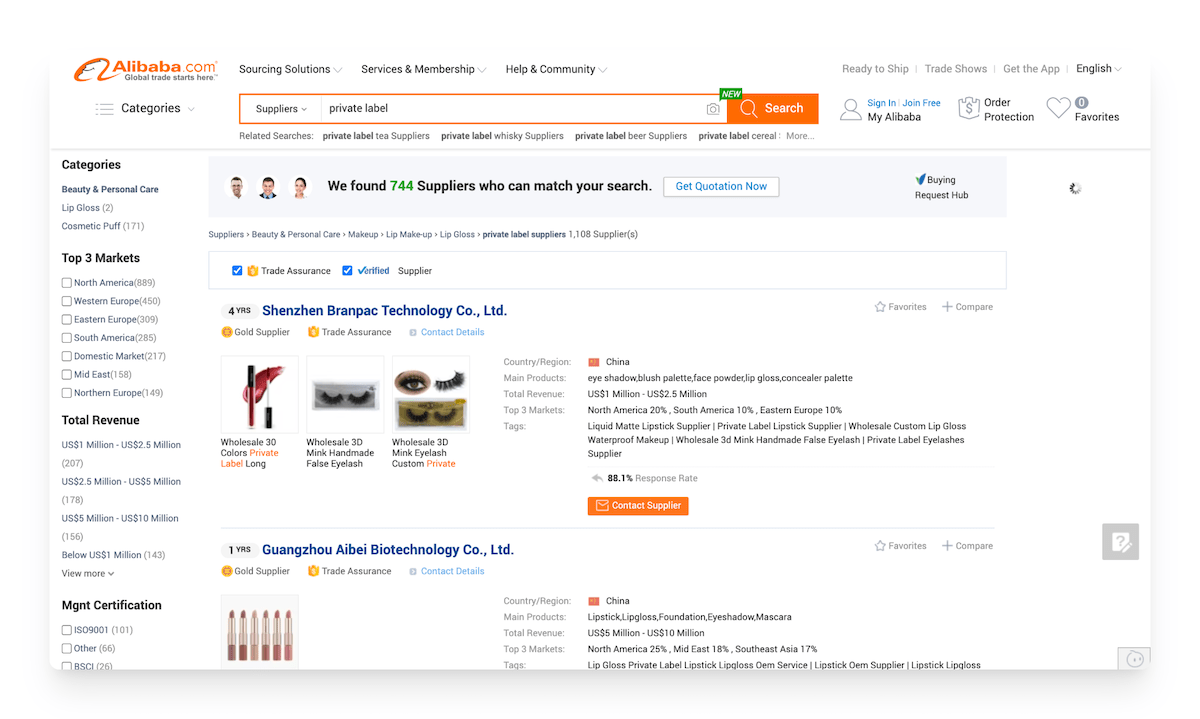
Home textile fabric available for purchase in bulk from global suppliers on B2B site Alibaba
In contrast, B2C ecommerce involves smaller, individual orders intended for personal use.
Consumers make purchases more frequently, such as weekly groceries, clothing, or electronics, with an emphasis on convenience and immediate needs.
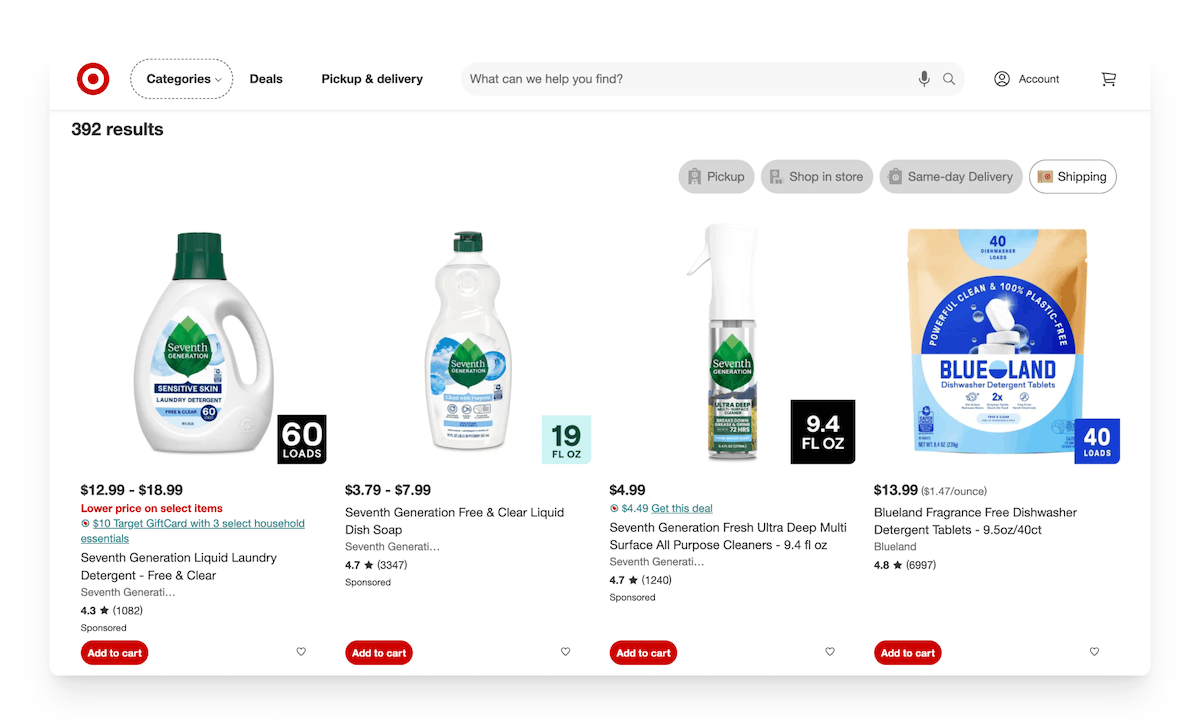
Target selling household supplies for consumers
The smaller order size and higher purchase frequency reflect the direct-to-consumer model and the personal consumption patterns of individual shoppers.
4. Pricing structure
When comparing B2B and B2C web commerce, you’ll also find that the two models differ in pricing.
Pricing structures are often flexible and tailored to business relationships in B2B ecommerce.
Companies frequently use negotiated pricing, volume discounts, and custom quotes based on order size, long-term contracts, or partnership agreements.
Pricing may also vary depending on the customer, industry, or purchasing history, with businesses receiving different price tiers for bulk purchases.
In B2C ecommerce, however, pricing is typically fixed and standardized for all customers.
Products are listed with clear retail prices on websites, and consumers generally pay the same amount for the same item.
While discounts or promotions may occur, the base price usually remains consistent and does not involve negotiation.
5. Sales cycle length
The sales cycle in B2B ecommerce is usually longer, often lasting weeks or even months.
Businesses take a while to evaluate suppliers, review product specifications, request quotes, and finalize agreements before placing orders.
The process may also involve discussions about pricing, delivery terms, and long-term partnerships, which extends the timeline.
The sales cycle is much shorter in the B2C version, often completed in minutes or days.
Consumers can browse products on the web, add items to a cart, and complete the purchase immediately.
Because transactions are straightforward and typically involve a single buyer, purchases happen much more quickly than in B2B ecommerce.
6. Marketing strategy
Marketing strategies for B2B brands involved in selling on the internet tend to concentrate on building professional relationships and generating qualified leads.
Companies often use content marketing, industry reports, webinars, and email campaigns to demonstrate expertise and provide value to potential business clients.
Source: Semrush
The messaging emphasizes efficiency, reliability, and return on investment to attract decision-makers in organizations.
For B2C e-tailers, marketing is typically more brand-driven and emotionally engaging.
They employ advertising, social media campaigns, influencer partnerships, and promotions to capture consumer attention.
Their messages often highlight lifestyle benefits, convenience, and personal enjoyment to encourage quick purchases and build strong brand recognition among a broad audience.
7. Customer relationships
Customer relationships in B2B and B2C ecommerce differ mainly in duration, complexity, and interaction style.
In B2B ecommerce, relationships are typically long-term and partnership-oriented. Brands often rely on a small number of suppliers for critical products or services, so trust and reliability are essential.
For this reason, B2B companies focus heavily on relationship management, personalized service, and ongoing communication to retain clients.
With B2C ecommerce, though, relationships are generally shorter and more transactional.
While loyalty programs and marketing aim to encourage repeat purchases, most interactions occur through automated systems, marketing campaigns, and self-service platforms rather than direct personal relationships.
8. Payment methods
The process of paying for a product or service also varies when looking at B2B and B2C digital commerce, differing mainly in process complexity and payment timing.
Payments are frequently delayed and structured for B2B sales occurring on the internet. Companies commonly use purchase orders, invoices, and negotiated credit terms such as Net-30 or Net-60, allowing the buyer to pay after receiving the goods or services.
Transactions may involve bank transfers, corporate accounts, or payment on credit, and approval processes within the buying organization. Since orders are usually on the larger size and recurring, payment systems must support detailed records, tax documentation, and integration with accounting systems.
However, B2C retail web sales typically require immediate payment at checkout. Consumers usually pay using credit or debit cards, digital wallets (like Apple Pay or PayPal), or other instant online payment options.
The process is designed to be fast, simple, and automated, supporting high volumes of smaller transactions with minimal administrative work.
Similarities between B2B and B2C ecommerce
Even though they differ, they share multiple fundamentals:
- Online storefronts: Both B2B and B2C ecommerce use digital storefronts where customers can browse products or services, view information, and place orders on the internet.
- Digital payments: The two models rely on secure online payment systems to process transactions efficiently between buyers and sellers.
- Customer experience optimization: B2B and B2C companies both focus on improving website usability, personalization, and service quality to enhance the overall customer experience.
- Logistics and fulfillment: Both require efficient logistics, the managing of inventory, and delivery systems to ensure products reach customers accurately and on time.
- Data-driven marketing: B2B and B2C ecommerce both use data analytics to understand customer behavior, target audiences effectively, and improve marketing strategies.
It’s important to note that many modern ecommerce platforms can support both models, allowing e-merchants to sell to consumers, other businesses, or a mixture of the two!
How can a business do both B2B and B2C ecommerce?
Some entrepreneurs looking to get involved in the sale of goods and/or services on the internet don’t wish to limit themselves to selling just to businesses or consumers… This is where a hybrid ecommerce model comes into play.
A hybrid ecommerce model allows a business to operate in both B2B and B2C markets at the same time.
For B2B, it can offer wholesale pricing, bulk ordering, and account management through a dedicated portal, while for B2C, it can provide a user-friendly online store with direct purchase options.
Take Nike, for example. It operates a hybrid ecommerce model, with direct-to-consumer product sales through its internet shop and apps while also supplying wholesale orders to retailers and distributors worldwide.
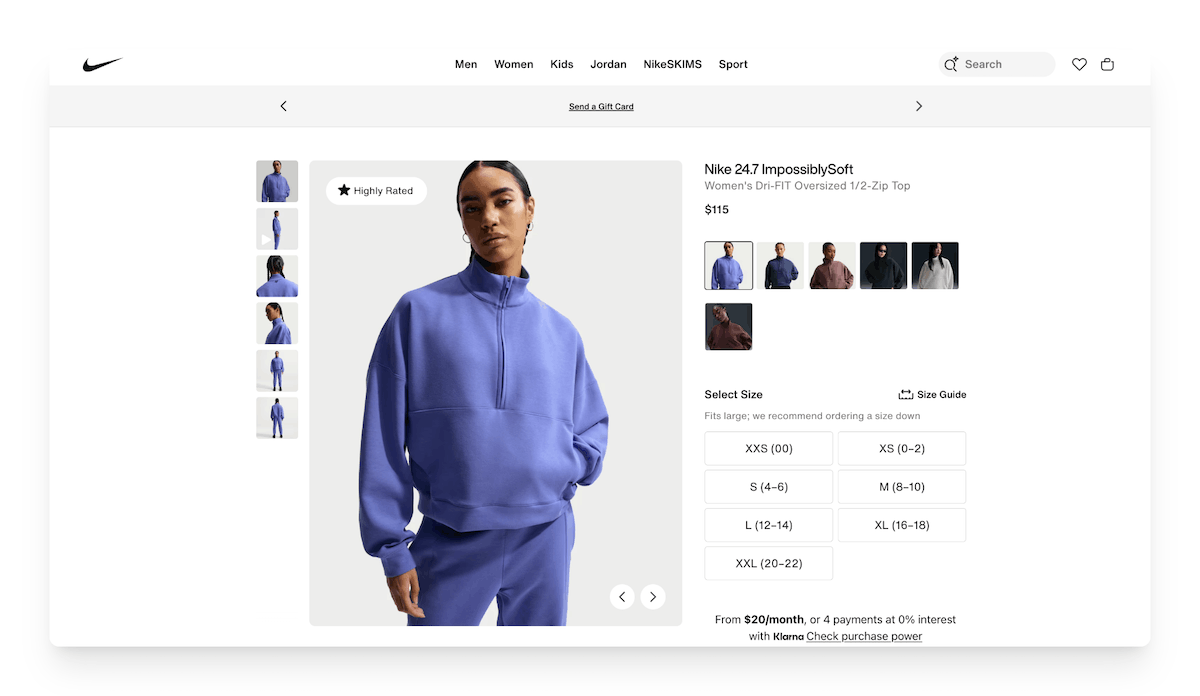
Example of B2C offerings from Nike
This allows Nike to maintain brand control, reach individual retail customers directly, and simultaneously serve large business partners with bulk orders efficiently.
There are certainly some benefits to employing a hybrid ecommerce model:
- More revenue streams: By serving both businesses and individual customers, companies can generate income from large wholesale orders and regular consumer purchases.
- Larger market reach: B2B/B2C brands can increase visibility and connect with more types of buyers.
However, hybrid models also create challenges.
- Pricing conflicts: Brands must ensure that wholesale partners aren’t undercut by direct online prices.
- Inventory management: Strong systems are needed to balance stock across both B2B and B2C channels effectively.
How to choose the right ecommerce model
If you’re hesitating between the B2B and B2C ecommerce models for your future online store, consider the following factors:
- Target market: The type of customers a business serves strongly influences the ecommerce model. If the main buyers are other companies purchasing in bulk, a B2B model is more suitable, while products aimed at individual consumers typically fit a B2C approach.
- Product type: Some products naturally align with specific markets. Industrial equipment, raw materials, or specialized tools are usually sold through B2B channels, whereas everyday goods such as clothing, electronics, or beauty products are commonly sold through B2C ecommerce.
- Pricing strategy: B2B pricing often involves negotiated rates, volume discounts, and long-term contracts. In contrast, B2C pricing is usually fixed, transparent, and designed to encourage quick purchasing decisions.
- Sales complexity: B2B sales processes are often more complex and may involve multiple decision-makers, customized orders, and longer sales cycles. B2C sales are typically simpler, with individual customers making faster purchase decisions through streamlined checkout processes.
- Marketing capabilities: B2B marketing tends to focus on relationship-building, industry expertise, and targeted outreach to specific organizations. B2C marketing usually relies more on broad digital strategies such as social media, advertising, and brand storytelling to attract large numbers of consumers.
Conclusion
As you can see, B2B and B2C ecommerce each demand distinct strategies tailored to the needs of their respective buyers.
B2B focuses on building long-term relationships, managing complex orders, and offering flexible payment terms, while B2C emphasizes fast, convenient transactions and personalized experiences for individual consumers.
When looking to launch a new ecommerce business, you must carefully evaluate your target market, product type, pricing, and sales complexity to choose the right approach. Aligning ecommerce strategy with customer expectations ensures smoother operations, stronger engagement, and higher revenue.
Companies that understand these differences can also explore hybrid models to expand reach and diversify income streams effectively.



Ava Bennett le 5 April 2026 à 19:58
Faculty of Economics and Management le 7 May 2026 à 09:36