

Running a successful ecommerce website takes more than simply listing products online.
To stand out in a competitive digital marketplace, online stores must combine smart design, strong security, and customer-focused features that create a seamless shopping experience.
From intuitive navigation and fast checkout to reliable support and transparent policies, every element plays a role in building trust and driving conversions.
When these essentials work together, they not only help retain loyal shoppers but also help brands get new customers who feel confident purchasing on the internet.
Today, we reveal the elements that your website should have to give you your best chance of succeeding in your digital commerce adventure. Here’s everything you need to know!
Key points in this article:
- Security elements on your site are crucial for protecting customer data and preventing unauthorized access, strengthening trust and reducing fraud.
- As your customers are likely to have different preferences, it’s important to offer multiple payment and communication methods on your website.
- Using responsive design ensures a smooth shopping experience on all devices, reaching more consumers.
- Adding an FAQ section and a help center can provide quick answers to common questions, improving user experience and reducing support needs.
- Order confirmation and tracking elements keep customers informed about their purchases and delivery status.
1. Navigation elements
When visitors arrive on your ecommerce website, they need to be able to browse without roadblocks and find what they’re looking for easily and quickly. Otherwise, they’re likely to get frustrated, leave without making a purchase, and head to one of your competitors instead!
Clear and intuitive navigation
Navigating an online store shouldn’t feel like you’re lost in a never-ending labyrinth, with Jareth the Goblin King liable to appear at any moment…
Well-structured menus allow shoppers to browse categories logically and access key pages of your online store with minimal effort.
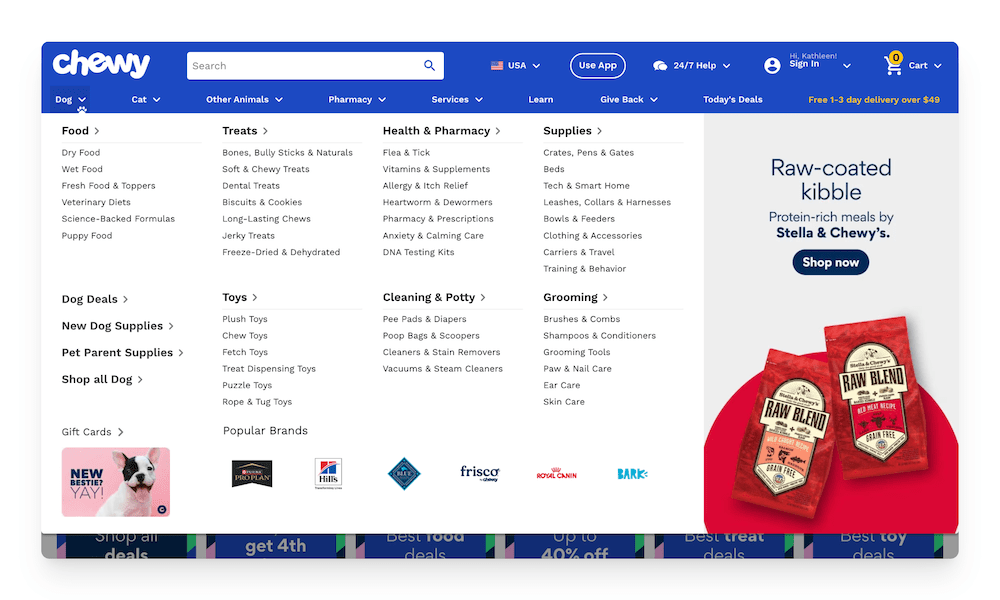
Example of an easy-to-navigate menu on the Chewy site
Breadcrumbs further support navigation by showing users their location within the site hierarchy, making it easy to backtrack or explore related categories, improving usability and overall shopping confidence.
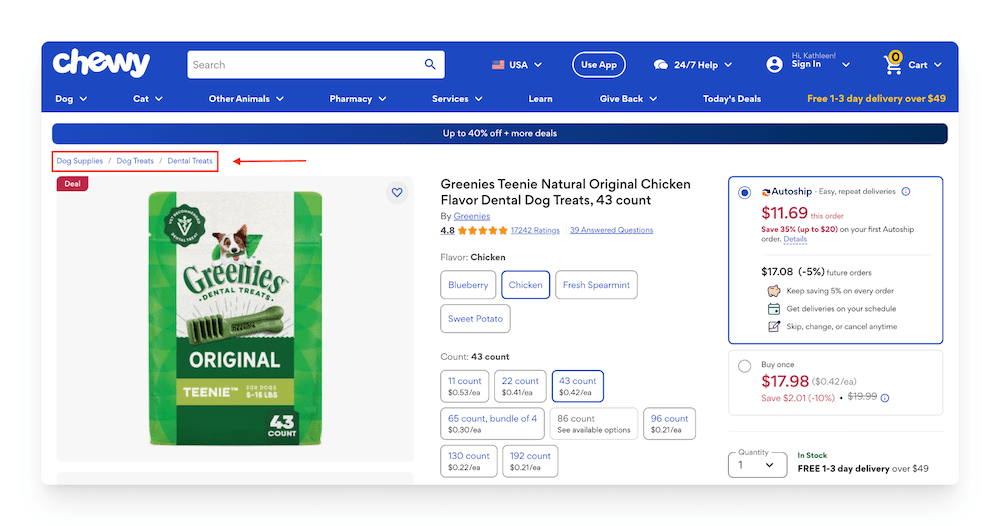
Example of breadcrumbs on the Chewy site
Internal search with smart results and filters
If your online store features a large product catalog, your customers might find that locating the best products to suit their needs is a time-consuming task.
Intelligent search features, such as autocomplete and relevant suggestions, reduce search time and frustration.
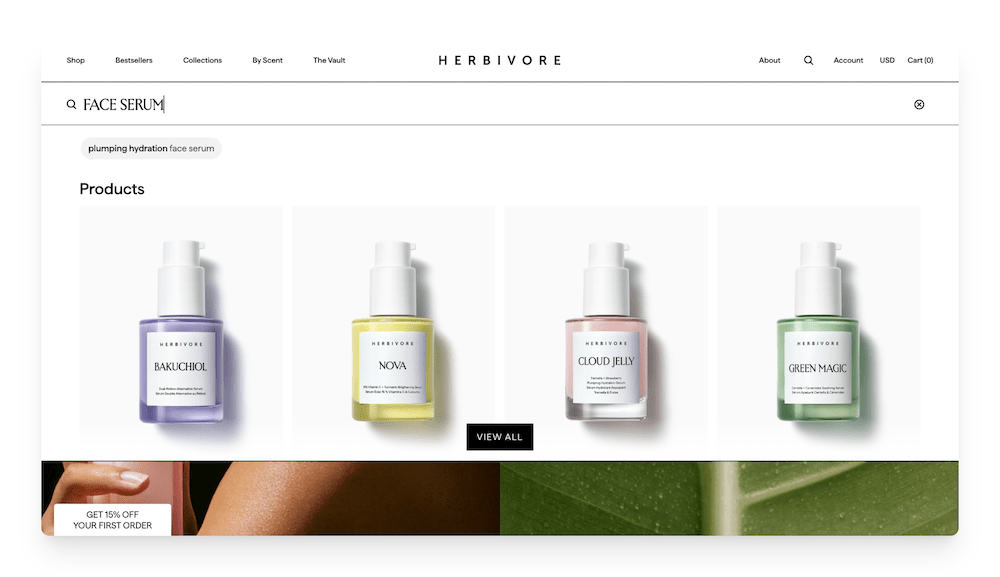
Relevant product selections provided when searching on the Herbivore Botanicals site
Filters allow users to narrow results by attributes like price, size, or brand, creating a more personalized shopping experience that increases engagement, satisfaction, and conversion rates.
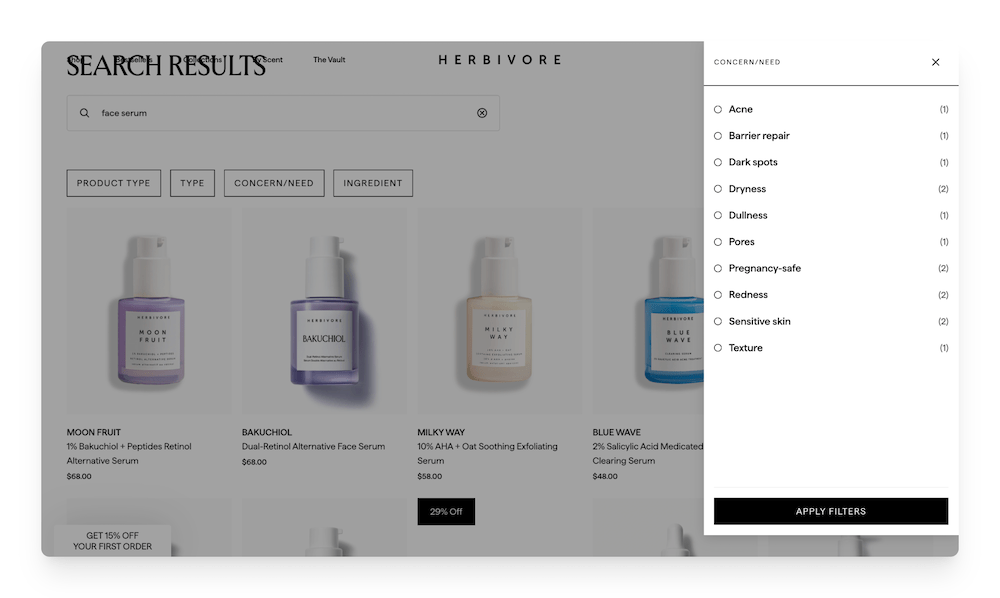
Search filter allowing users to select their skin concern or need on the Herbivore Botanicals site
Responsive and mobile-first design
With a growing number of consumers shopping on smartphones and tablets, it makes sense for ecommerce businesses to prioritize responsive design and take a mobile-first approach when it comes to their websites to improve the customer experience.
This strategy involves adapting layouts to different devices, providing a consistent experience across platforms, reducing bounce rates, and increasing customer trust, engagement, and conversions.
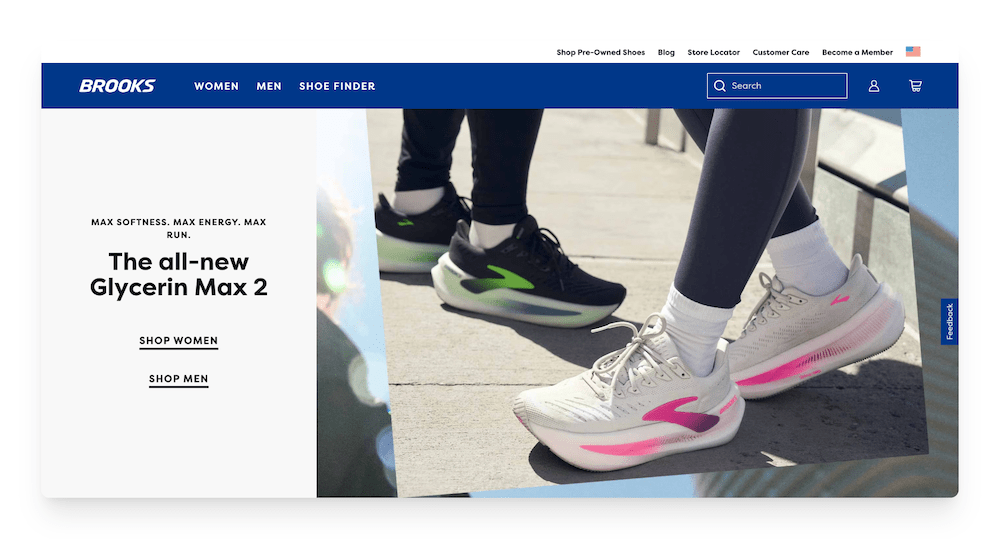
The Brooks website viewed from a desktop device
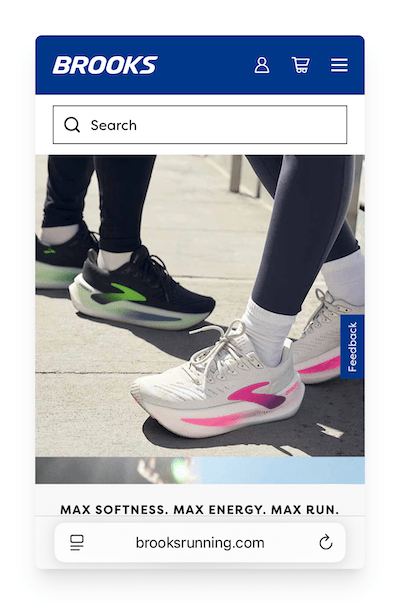
The Brooks website viewed from a mobile phone
In addition, it means ensuring that pages load quickly, content is easy to read, and interactions like browsing and checkout work smoothly on smaller screens.
Fast loading speed
These days, internet users expect pages to load instantly and won’t hesitate to abandon slow websites.
Quick performance improves user satisfaction, engagement, and conversion rates.
It’s therefore crucial to consider Google’s Core Web Vitals, such as Largest Contentful Paint, First Input Delay, and Cumulative Layout Shift, which measure loading speed, interactivity, and visual stability, when completing your ecommerce checklist.
To see how your online store is currently performing, you can check out your Core Web Vitals report in Google Search Console.
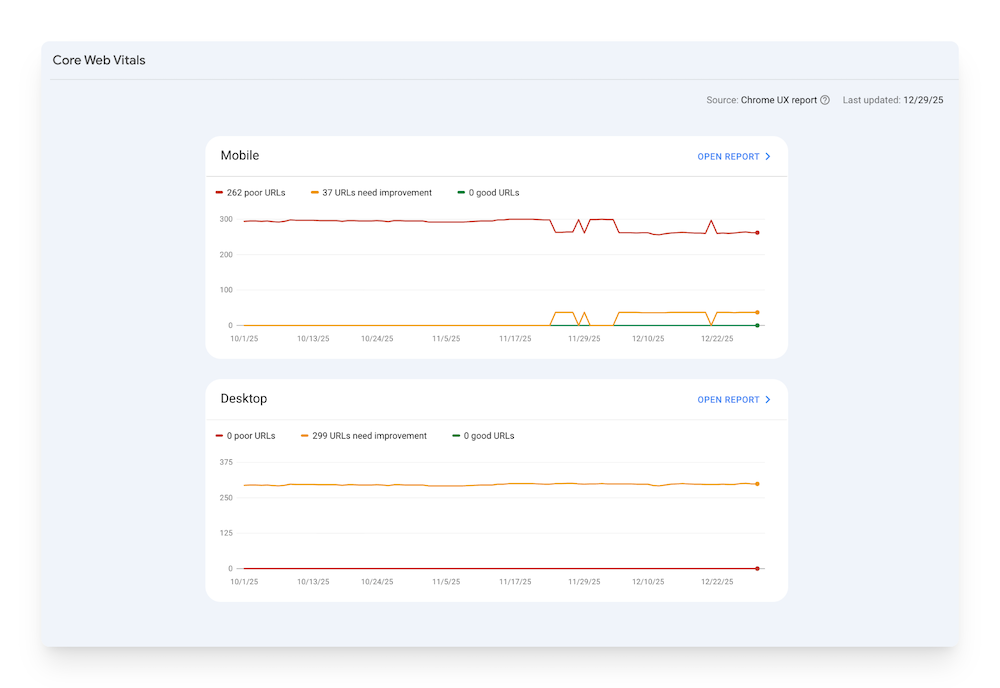
Example of a Core Web Vitals report in Google Search Console
Optimizing these metrics ensures a smooth user experience, strengthens SEO performance, and builds trust with potential customers.
Accessible footer
When people are visiting your online store, they should be able to easily locate not just the products they’re looking for but also pertinent details related to your business.
An accessible footer gives visitors quick access to essential information no matter where they are on the site.
This footer should include links to legal policies, contact details, customer support, FAQs, and shipping or returns to build transparency and trust.
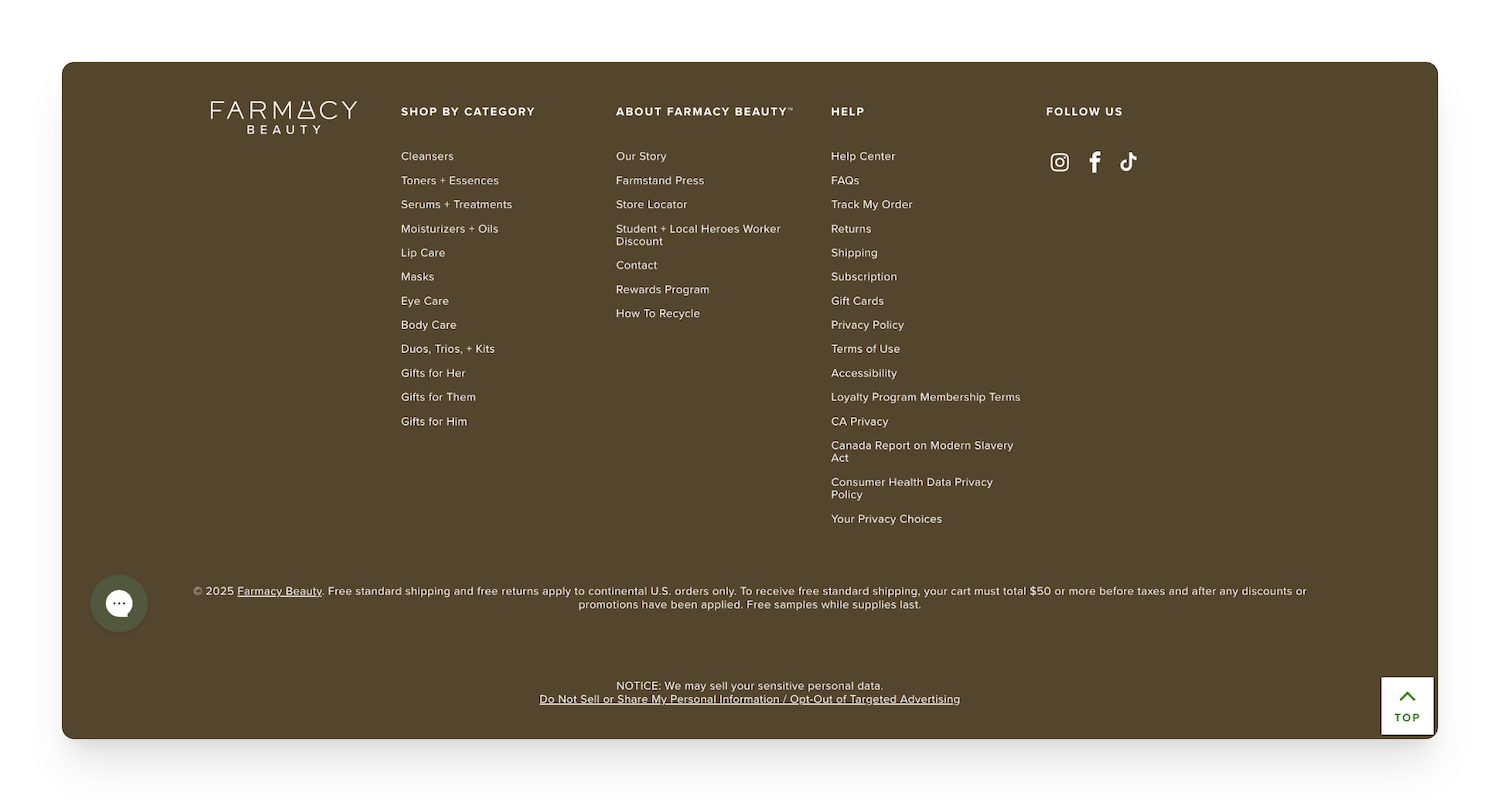
Footer featuring important information on the Farmacy Beauty site
2. Product and content elements
How internet commerce brands display the products they sell online plays a key role in whether website visitors decide to make a purchase. Clear, attractive, and informative presentations help customers quickly understand product features, build trust, and make confident purchasing decisions.
High-quality product images and videos
Despite ecommerce offering numerous advantages compared to traditional commerce, one aspect that online shopping lacks is the ability to see and touch products in person.
To convince site visitors to click “Buy Now,” you’ll need to add high-quality product images and videos, providing a clear, detailed view of products, helping customers better understand features, colors, and textures.
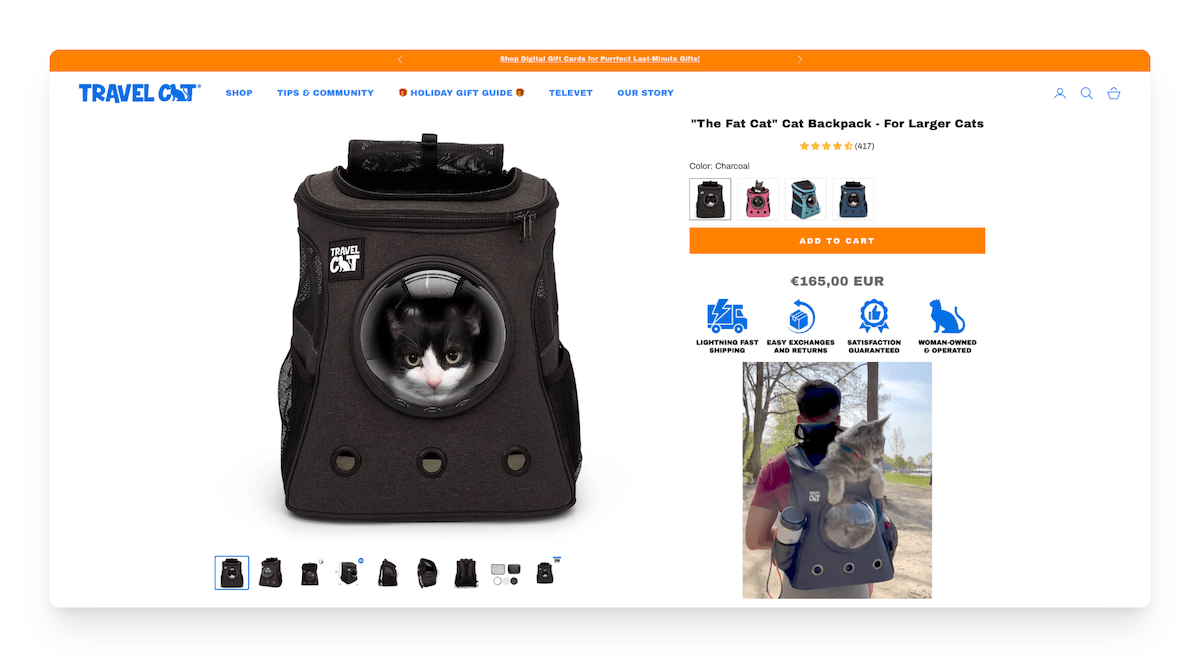
Detailed photos and a video of “The Fat Cat” Cat Backpack by Travel Cat
Visual content strengthens trust by reducing uncertainty and mimicking the in-store experience. Videos can showcase products in action, highlighting benefits and usage.
Detailed product descriptions
In-depth product descriptions featuring benefits and specs are vital because they provide customers with clear, comprehensive information needed to make informed decisions.
Shining the spotlight on your product’s benefits shows how the product can solve problems or improve the user’s life, while specifications offer technical details that increase trust and reduce uncertainty.
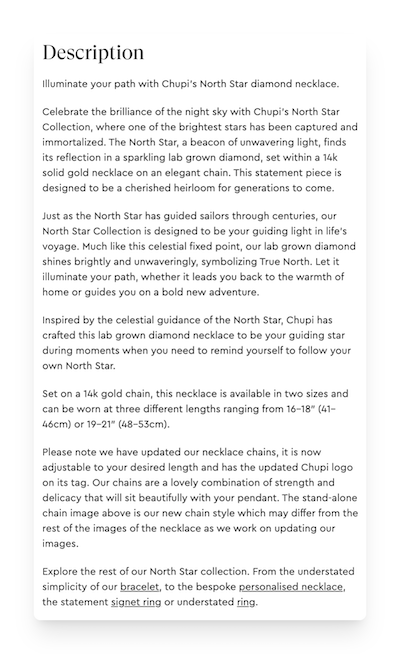
Detailed product description for the North Star Diamond Necklace by Chupi
Furthermore, well-written descriptions improve SEO, increase user confidence, and decrease returns by setting accurate expectations, ultimately driving higher engagement and conversions.
Customer reviews and ratings
User-generated content in the form of customer reviews and ratings can be a stellar asset for ecommerce brands.
This is because many shoppers tend to have more confidence in the opinions of other consumers who’ve already bought and used a product over the declarations of the company selling the item.
Customer reviews and ratings supply authentic, unbiased feedback from real buyers, offering social proof that influences purchasing decisions and can highlight product strengths or weaknesses.
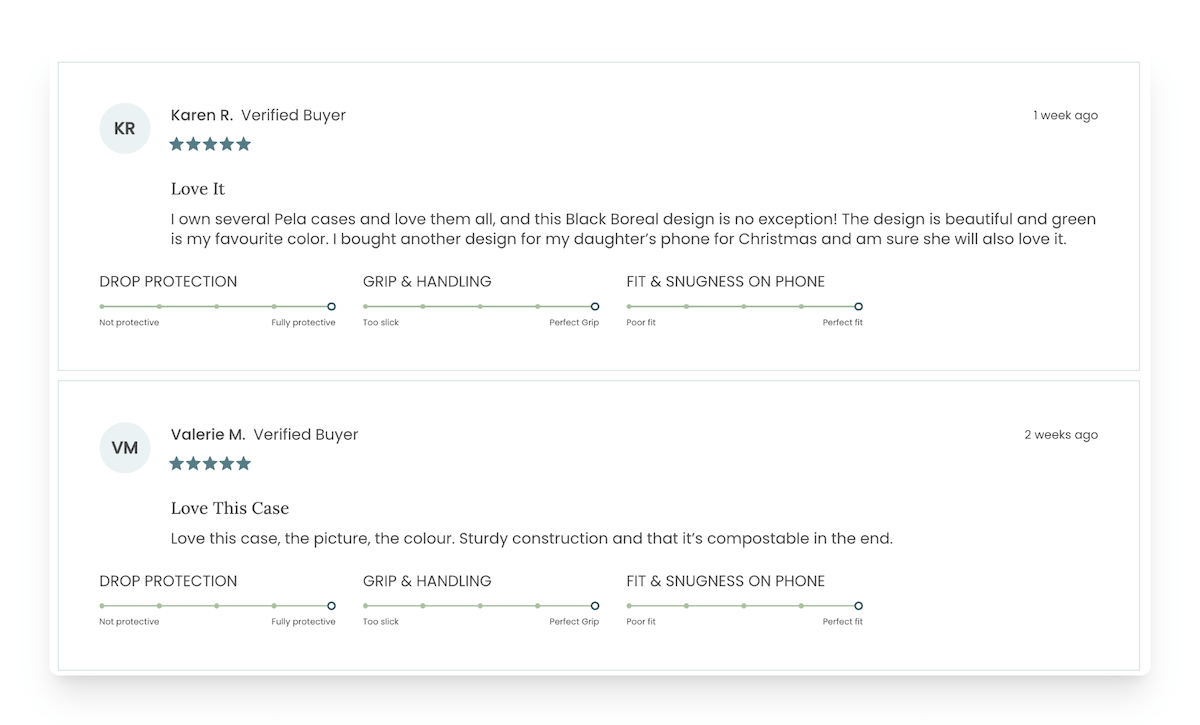
Customer reviews for a phone case by Pela
Reviews also improve your business’s SEO by adding fresh content, while ratings simplify comparison.
Accurate pricing, stock, and delivery information
It’s crucial to set clear expectations for potential customers from the moment they land on your website to reduce cart abandonment, improve satisfaction, and foster loyalty by ensuring a smooth, trustworthy shopping experience.
For instance, transparent pricing avoids surprises at checkout, while up-to-date stock levels prevent frustration from ordering unavailable items.
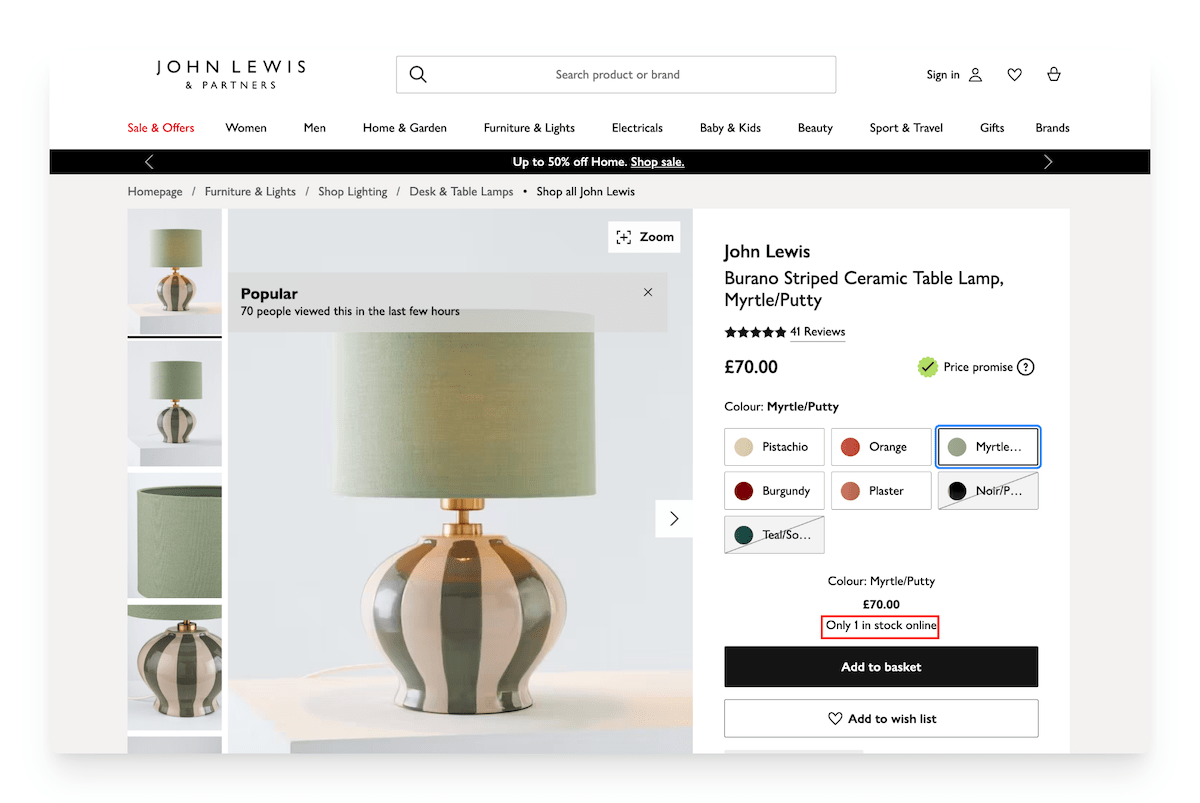
Stock level displayed for a product on the John Lewis site
Then, reliable delivery details help customers plan and feel confident about receiving their purchases on time.
Product comparison and related products
The people visiting your online store are likely to sometimes be unsure if one of the items you have for sale is right for them.
Supplying product comparisons and suggesting related products allows you to assist them in making informed decisions by easily evaluating features, prices, and benefits side by side.
Comparisons reduce confusion and speed up the buying process.
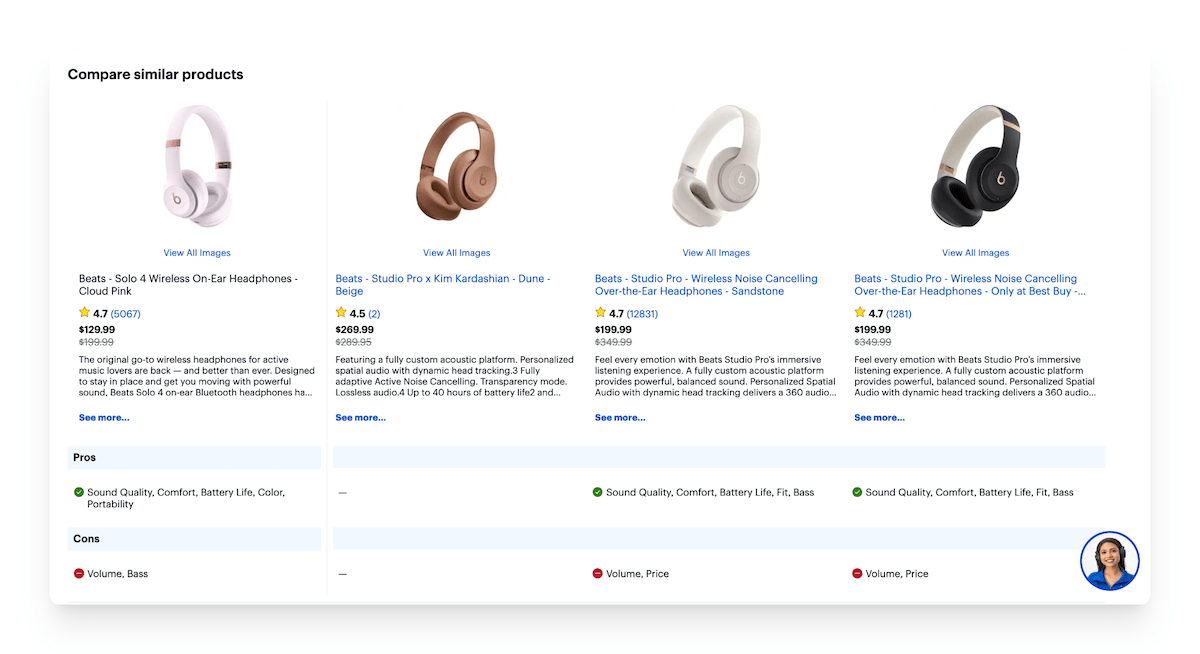
Product comparisons for headphones on the Best Buy site
Related product suggestions increase cross-selling opportunities by showcasing complementary or alternative items, enhancing the shopping experience.
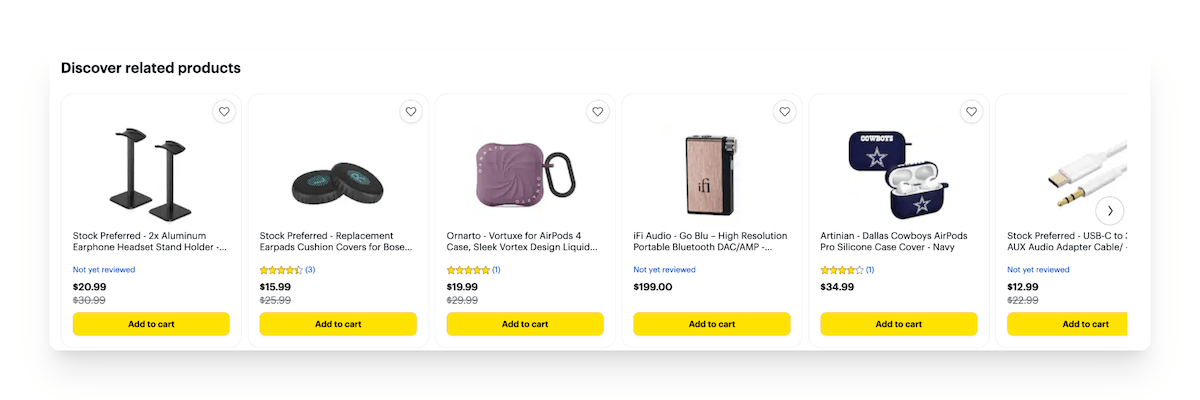
Related product suggestions on the Best Buy site
3. Checkout and payment elements
When the time comes for people to check out and pay for their orders on your website, you’ll want to be sure to make this process as seamless as possible by optimizing a few key elements.
Simple and distraction-free checkout
The checkout is the most critical stage of the buying journey.
You can aid in minimizing friction here and boost the likelihood of conversion by offering clear steps, minimal form fields, and the removal of unnecessary elements to reduce confusion and frustration.
A streamlined checkout helps users complete purchases quickly and confidently, lowering cart abandonment rates, improving conversion rates, and creating a smoother, more trustworthy shopping experience.
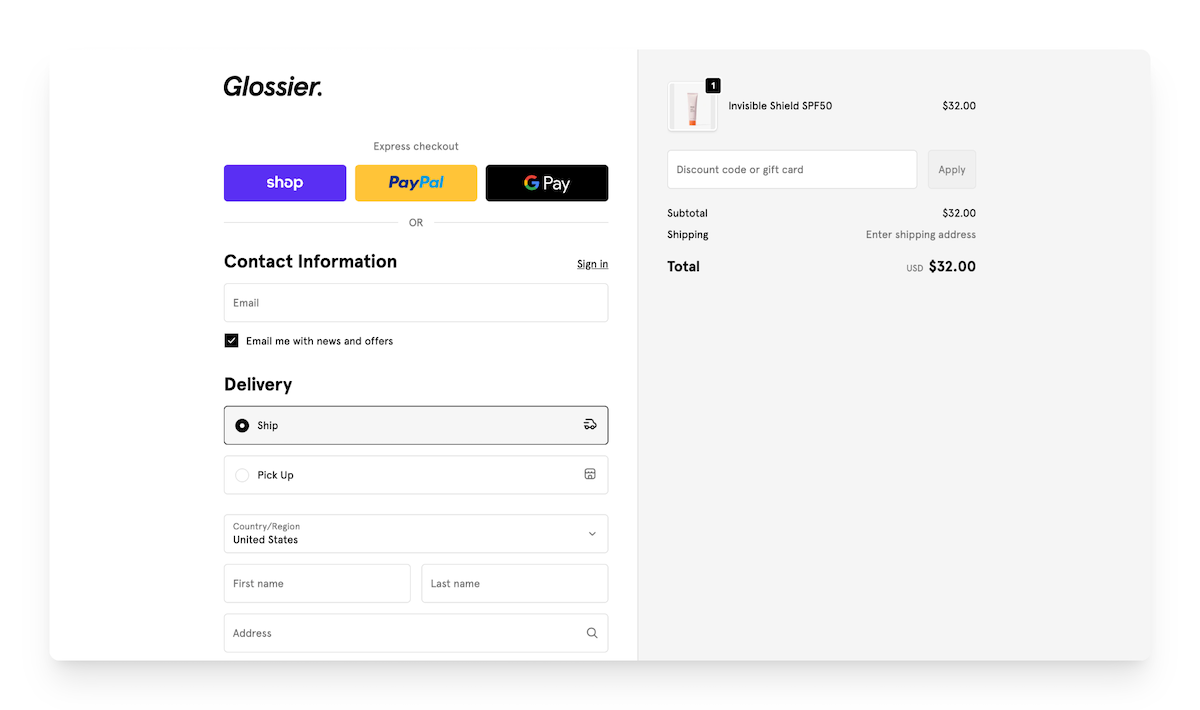
Simplified checkout page on the Glossier site
Guest checkout option
While it can be beneficial for both you and your customer to have them create an account on your website when finalizing a purchase, not everybody wants to take the time to do so.
Many customers prefer a fast, hassle-free buying experience, especially for first-time or one-off purchases.
Offering a guest checkout option speeds up the process, reduces friction, and lowers cart abandonment.
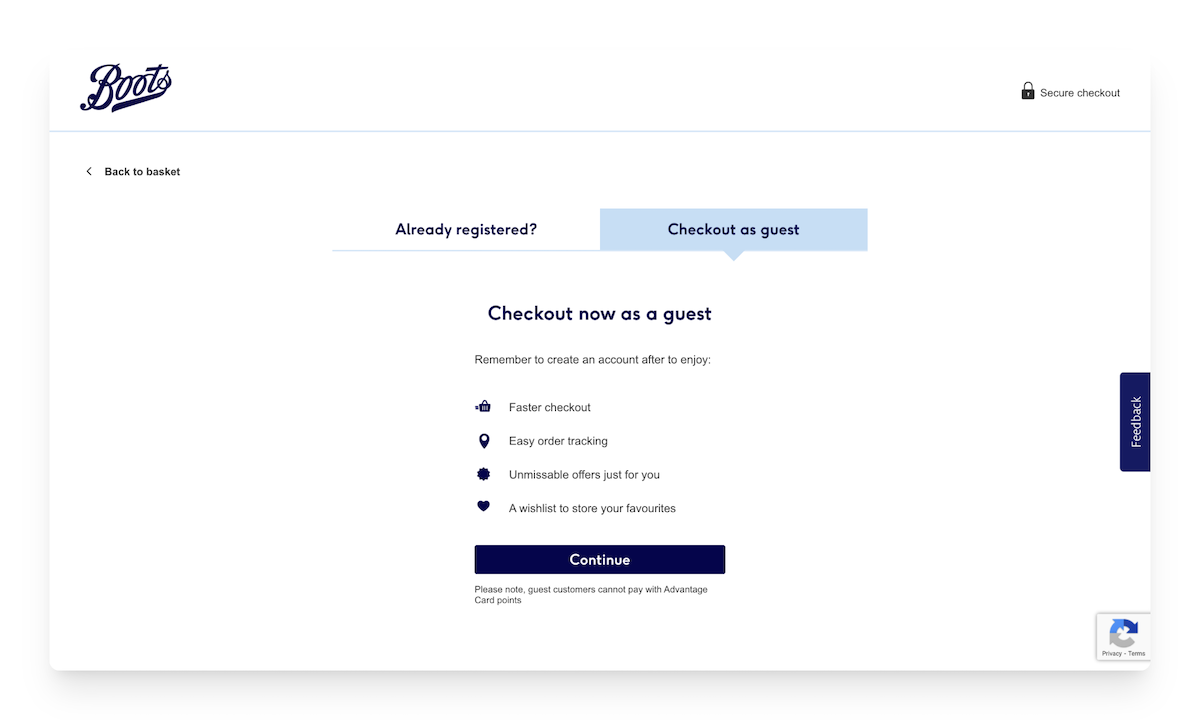
Guest checkout available on the Boots website
Multiple payment options
Customers have different preferences and expectations when it comes to paying online.
Supporting credit and debit cards, digital wallets, and alternative payment methods like buy now, pay later (BNPL) increases convenience and trust and is one of the must-have ecommerce features for online stores, regardless of what they sell.
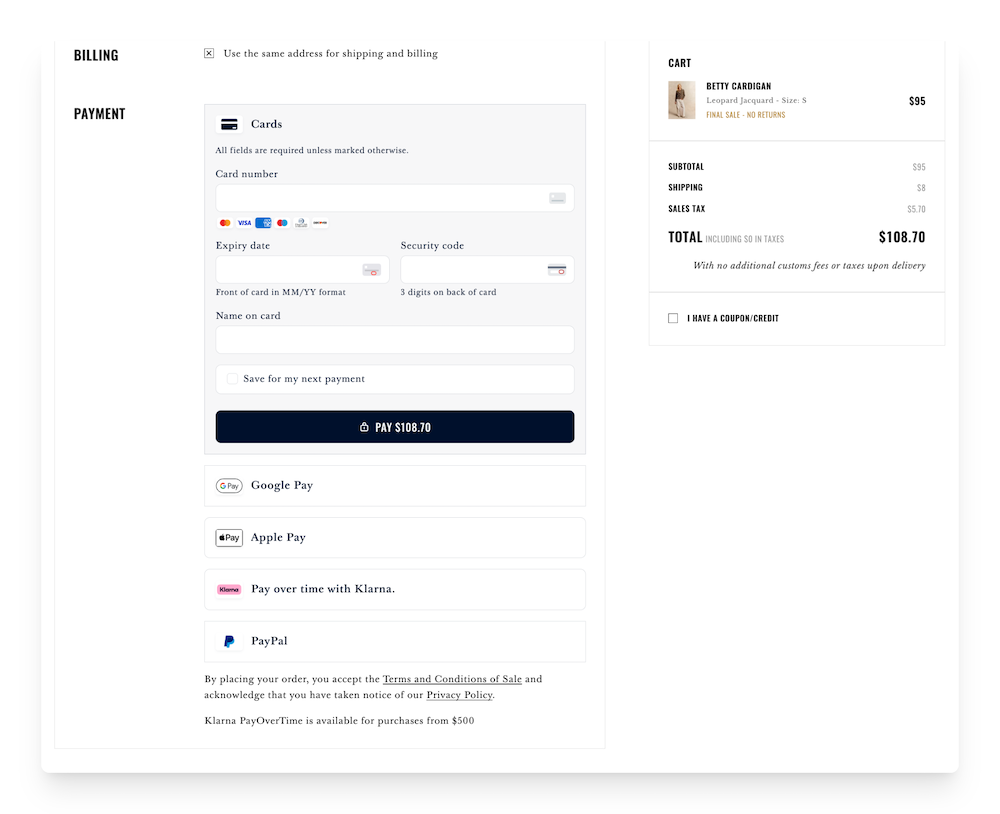
Various payment options available on the Sézane site
When shoppers can use their preferred payment option, they’re less likely to abandon their carts.
Transparent shipping and return policies
Shoppers are going to want to know delivery costs, timelines, and how returns are handled if a product doesn’t meet their needs.
Clear policies build trust, prevent unpleasant surprises, and reduce customer service issues.
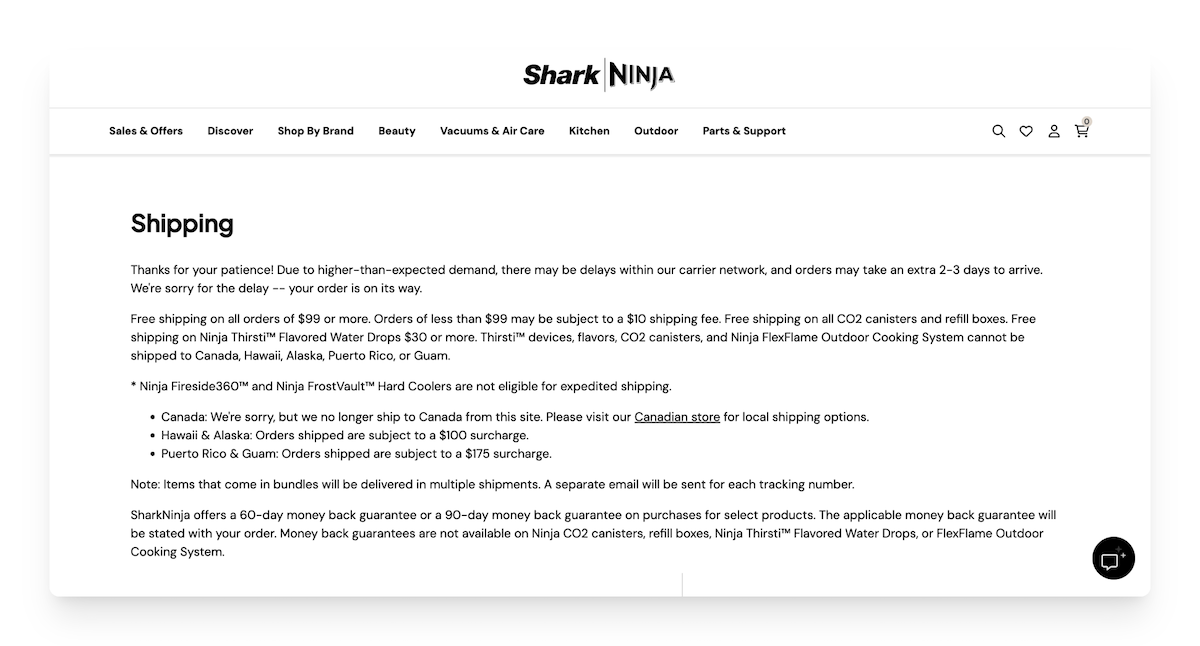
Shipping and returns information from Shark / Ninja
By making shipping and returns easy to understand, you increase confidence, lower cart abandonment, and encourage repeat purchases.
Order confirmation and tracking
Features related to order confirmation and tracking reassure customers that their purchase was successful and is being processed.
Immediate confirmation reduces anxiety and provides key details such as order summary and payment status.
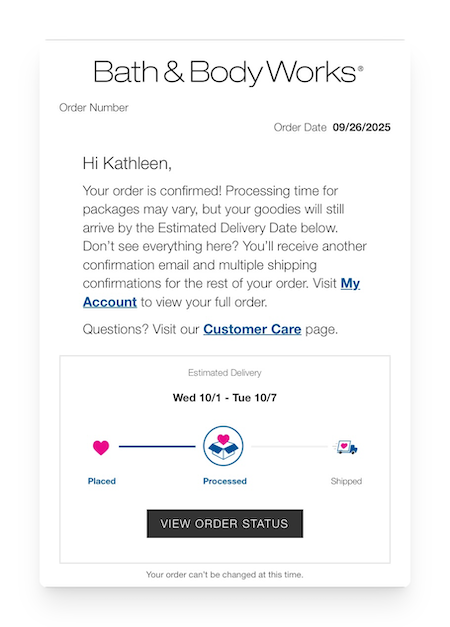
Order confirmation email from Bath & Body Works
Tracking information keeps customers informed about delivery progress, improving transparency and trust.
4. Security, compliance, and reassurance elements
Often overlooked by competitors, elements pertaining to security, compliance, and reassurance work to protect customer data, bolster trust, ensure legal adherence, and create a safe shopping environment that encourages purchases.
SSL and secure payment gateways
The act of making online payments can be a source of stress for some shoppers, who may fear their sensitive customer data, such as credit card information, getting intercepted by hackers.
Implementing Secure Sockets Layer (SSL), a technology that encrypts the connection between a user’s browser and a website to ensure secure and private data transmission, and secure payment gateways, which provide trusted, compliant methods for processing transactions, is a simple step that e-tailers can take to ease customers’ minds.
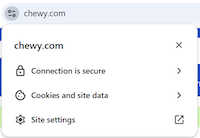
Padlock indicating that the Chewy site is secure
Together, these elements reduce fraud risk, increase trust, improve compliance with regulations, and spur customers to buy products safely.
Privacy policy, cookies, and data protection
Consumers are increasingly concerned about how their personal information is collected, used, and safeguarded.
For this reason, it’s important for ecommerce brands to be transparent about their privacy and cookie policies, also ensuring compliance with data protection laws like Europe’s General Data Protection Regulation (GDPR) to prevent legal issues.
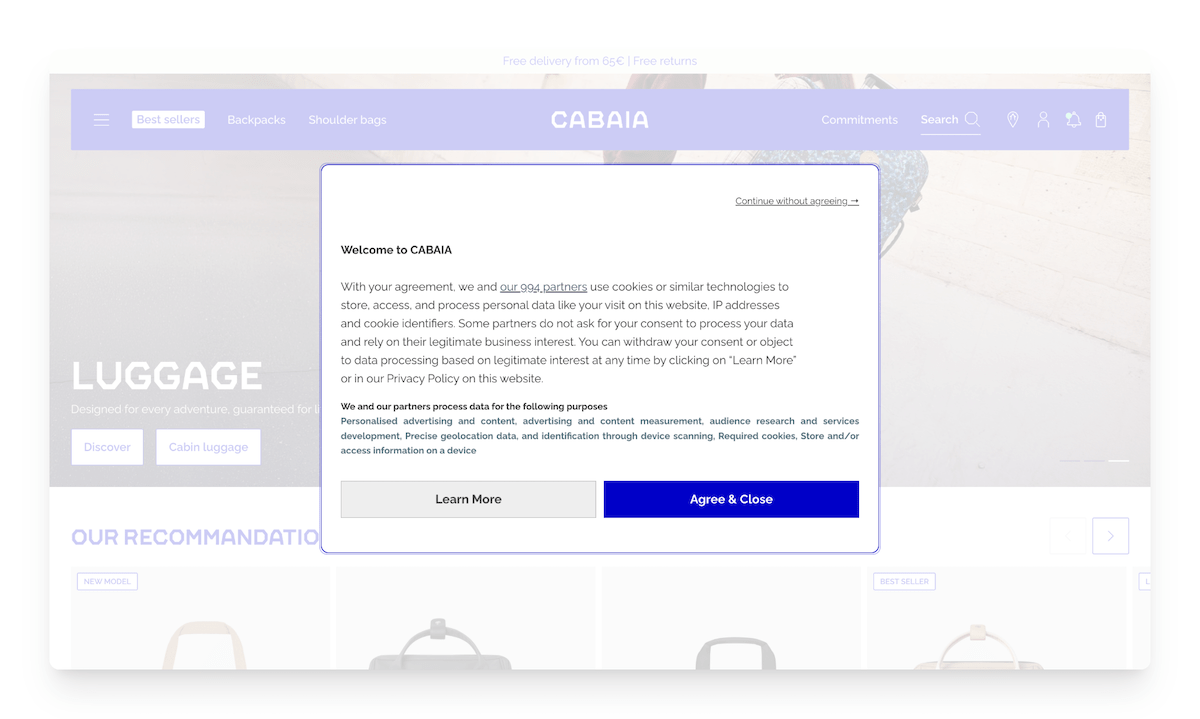
Privacy message on the Cabaia site
By doing so for your own website, you protect customer rights, improve confidence, and demonstrate your commitment to ethical and secure handling of sensitive data.
Trust badges and certifications
Trust badges and certifications are visual symbols displayed on an ecommerce website that indicate security, authenticity, or quality standards, such as SSL certification, payment security, or industry memberships.
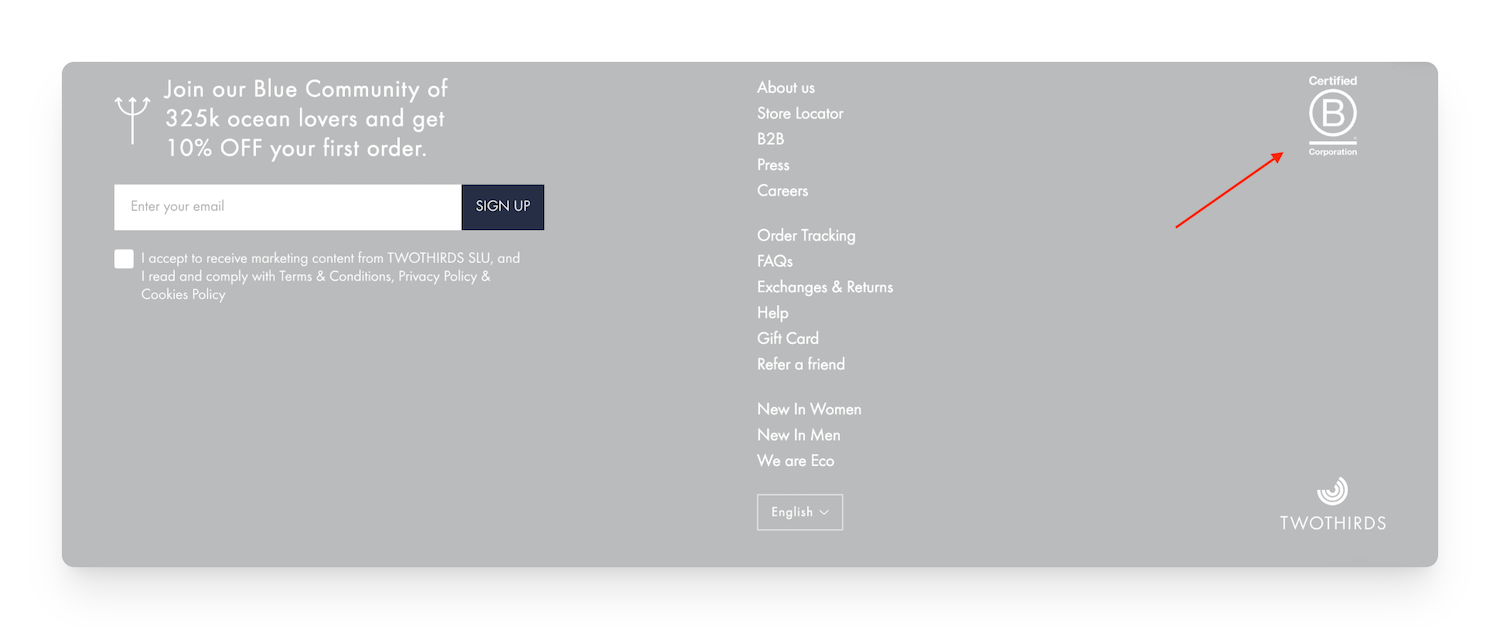
B Corp Certification on the Twothirds website
They’re crucial in ecommerce because they instantly reassure customers that the site is safe, reliable, and credible.
As these elements boost confidence, they can reduce purchase hesitation, lower cart abandonment, and increase conversion rates, ultimately helping to build a trustworthy brand reputation and get customers to return again and again.
Fraud prevention and account security
It’s also important for e-tailers to have site features in place to protect customers’ personal and financial information from theft and misuse.
These features might include, for instance, two-factor authentication (2FA), CVV checks to validate card transactions, account lockouts and CAPTCHA to reduce brute-force and bot attacks, and regular security updates and monitoring to identify and fix vulnerabilities.
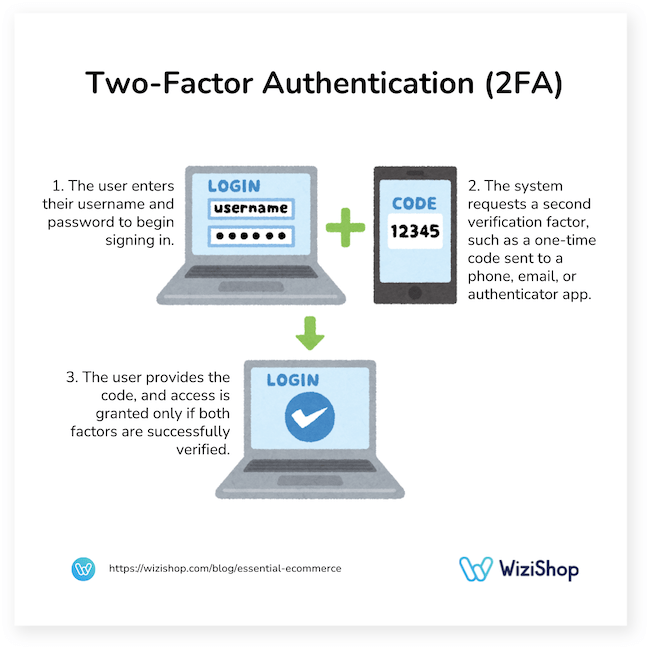
Strong security measures help prevent unauthorized transactions, reduce chargebacks, and minimize financial losses for both businesses and shoppers.
5. Customer support and post-purchase experience elements
With customer service being one of the pillars of ecommerce, online stores should have a variety of elements to assist shoppers before, during, and after their purchases.
FAQ and help center
Including an FAQ section and a help center on your ecommerce site is a good idea because they quickly answer common questions, reduce customer frustration, and lower support costs.
Easy access to clear information about shipping, returns, payments, and accounts boosts trust and improves the shopping experience.
To implement them effectively, organize questions by topic, use simple language, keep answers concise, and update information regularly.
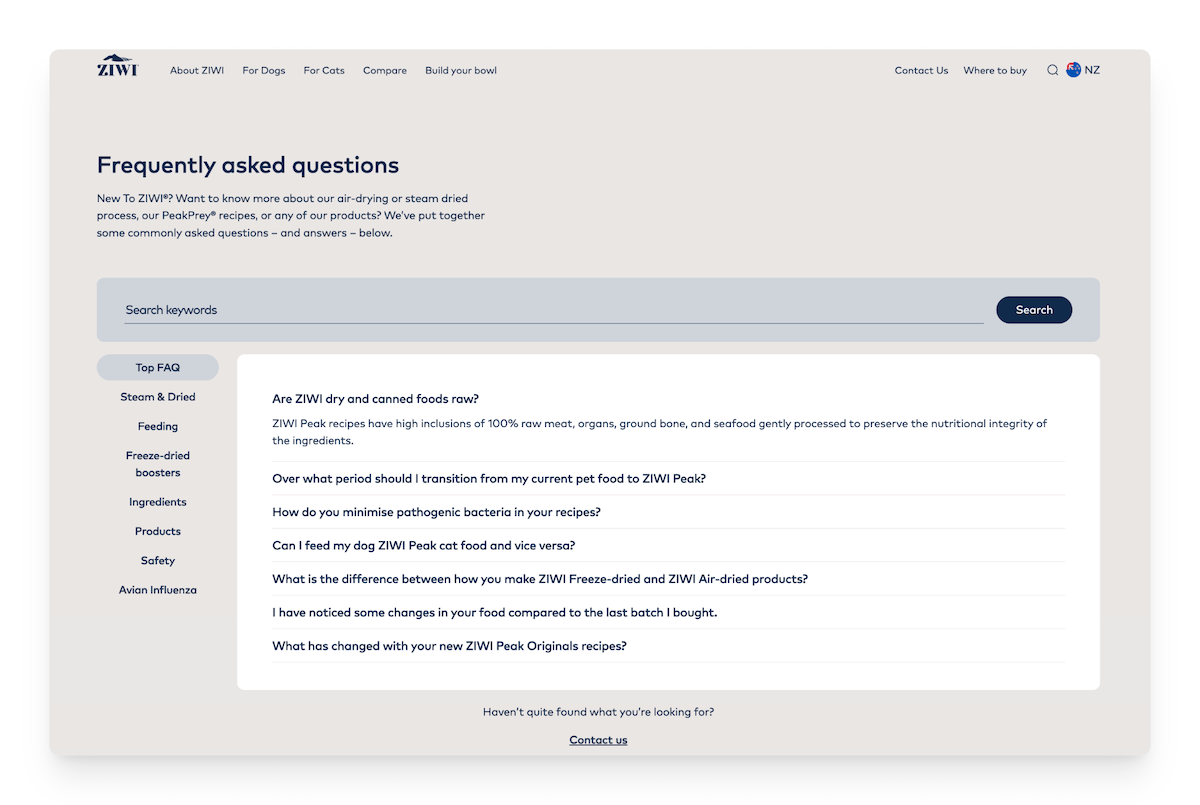
FAQ section on the ZIWI site
Adding search functionality and links to contact support helps customers resolve issues efficiently and complete purchases with confidence.
Multiple contact channels
Customers have different preferences and urgency levels when seeking assistance.
Offering options like email, live chat, phone, and social media improves accessibility, speeds up issue resolution, and increases customer satisfaction and trust.
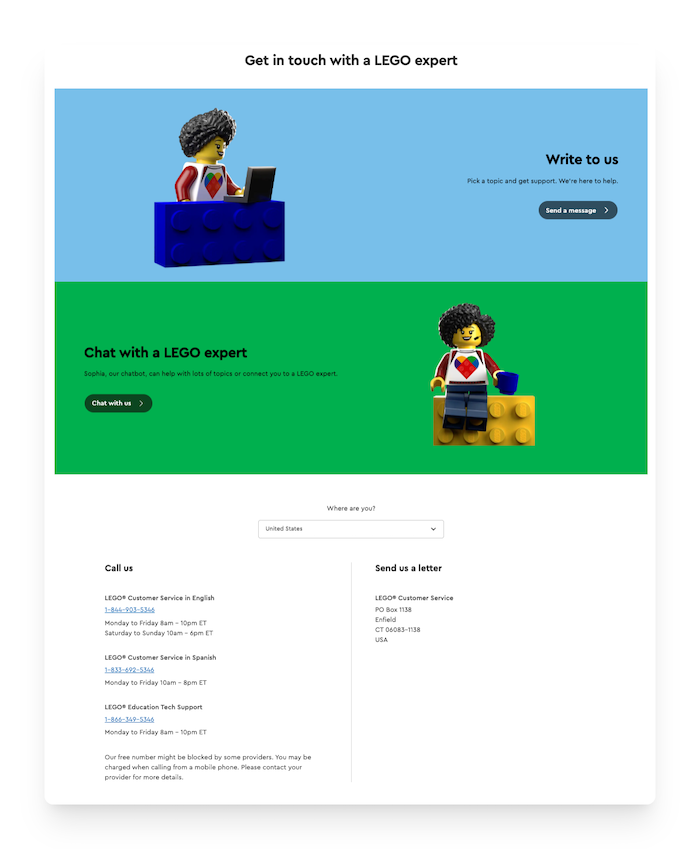
LEGO offering various ways to get in touch
Just be sure that all channels are easy to find, consistently branded, and well staffed.
In addition, you’ll want to set clear response-time expectations and integrate channels into a single support system to maintain efficient, seamless customer communication.
Order tracking and returns management
Once a customer places an order on your site, they’ll be anxiously awaiting its arrival!
Making it easy for shoppers to track their orders will enhance transparency and customer confidence throughout the purchase journey.
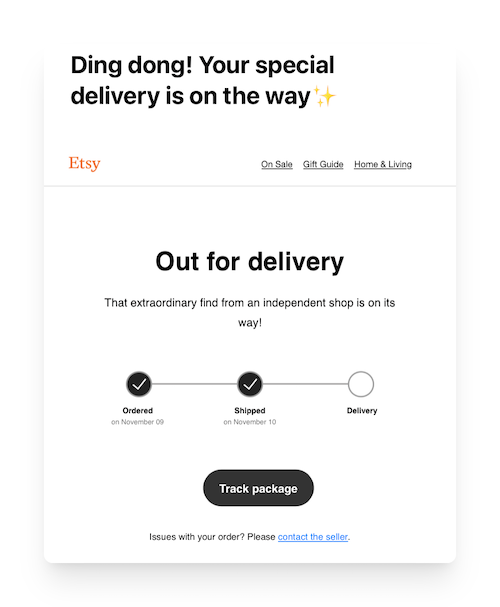
Order tracking with Etsy
It can also reduce support inquiries, freeing up you and/or your support team to handle more complex issues.
While you always hope the customer is going to enjoy their purchase, there are times when a return will be necessary, and you’ll want to ensure that this process is as simple as possible, perhaps by offering easy-to-use return portals and prompt refunds or exchanges.
Account area
When customers create an account on your website, it’s advantageous to provide them with a personalized space to manage their shopping experience for added convenience.
This area should include order history, invoices, and tracking details so users can review purchases easily.
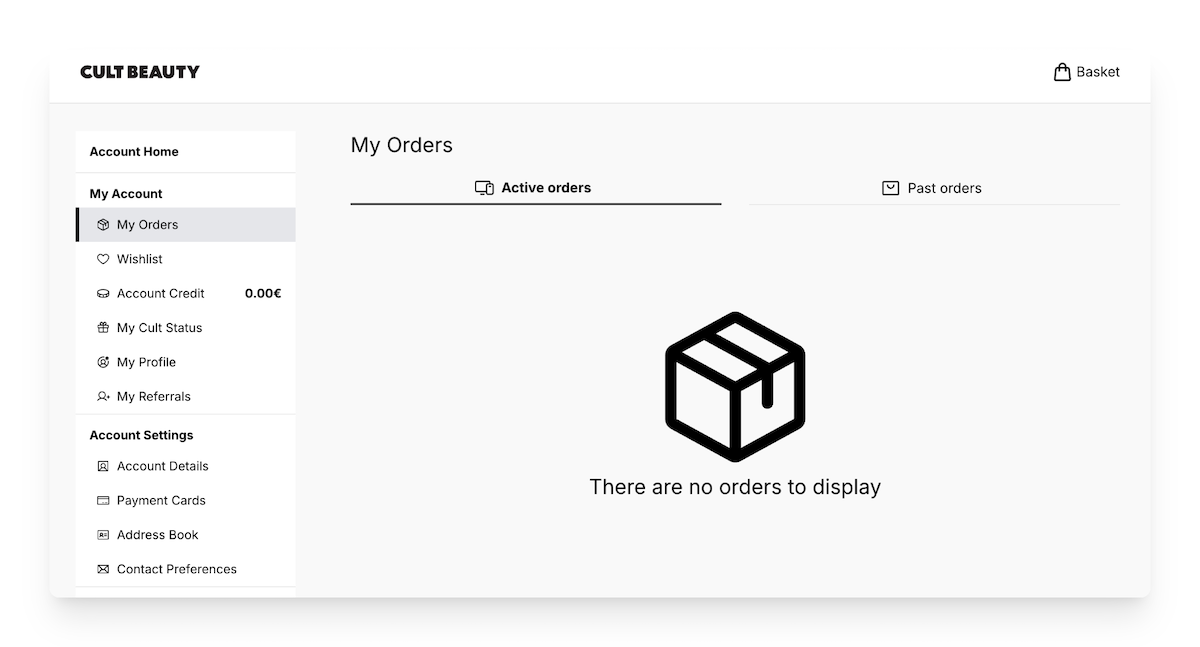
Account area and order history on Cult Beauty
Furthermore, features like saved payment methods, address book, and preferences assist with streamlining future checkouts.
Allowing customers to update personal information and communication settings enhances control and satisfaction, encouraging repeat visits and long-term engagement.
Conclusion
Building a successful ecommerce website requires a well-rounded strategy that prioritizes security, customer support, and convenience.
Essential elements like fraud prevention, multiple contact channels, and a comprehensive account area not only protect your customers but also enhance their shopping experience.
Providing clear order tracking and an efficient returns process builds trust in your business, encouraging repeat purchases.
By combining these features with compelling offers and seamless usability, you create an environment that drives sales and fosters long-term loyalty.
To facilitate your online selling adventure, be sure to create your website with an all-in-one ecommerce platform like WiziShop.
WiziShop offers numerous design templates to build the online storefront that suits the vision you have for your business.
In addition, with our AI-powered solution, adding products and creating content for your site is a breeze. The AI can assist you in generating product descriptions, blog articles, social media posts, translations, and more in seconds!
Various pre-integrated marketing tools are at your disposal to make it easier for you to manage your ecommerce site, attract new shoppers, and keep existing customers coming back for more.
And if you’ve ever got a question, big or small, about your store, our team of knowledgeable Business Coaches will be happy to answer your queries.
Sign up today and enjoy a 7-day free trial!
Try WiziShop free for 7 days
THE EASIEST NO-CODE ECOMMERCE SOLUTION✅ No credit card required
✅ Access to all features
✅ No commitment
FAQ
Why does my website require various elements to succeed in ecommerce?
These essential elements ensure that your site delivers a fast, secure, and intuitive shopping experience that makes it easy for customers to find products, complete purchases, and trust your brand.
How does website design impact ecommerce success?
A clear and intuitive design helps shoppers quickly locate and buy products with ease.
Why is transparency important in online shopping?
Providing straightforward information on orders, shipping, and returns builds confidence and trust.