


Key points in this article:
- Branding is more than just visuals—it’s your store’s identity and promise.
- Good branding builds trust, differentiation and stronger customer relationships.
- Consistency is key across visuals, tone, packaging and customer experience.
- Storytelling and brand values, not just products, make customers emotionally invested.
- Trust-building through quality content, social proof, and customer experience is crucial.
Unless you’re targeting a very small niche, you’re bound to have some competition when selling products or services on the internet.
To help your brand stand out from competing businesses with similar offerings and increase online sales, having a branding strategy is key.
In this article, you’ll discover what ecommerce branding is, why it’s important, best practices, the steps for building a successful brand on the internet, and some examples of ecommerce branding done right.
What is ecommerce branding?
Ecommerce branding: The process of shaping how people perceive an online store and the value it offers.
Ecommerce branding goes far beyond a logo or color palette… It defines the identity, personality, and promises that distinguish a business from countless competitors selling similar products on the internet.
Effective ecommerce branding starts with a clear understanding of the company’s mission, target audience, and unique selling proposition.
From there, it translates these elements into consistent visuals, messaging, tone of voice, and customer experiences across every touchpoint.
Every element, including website design, packaging, social media posts, product descriptions, customer service, and even post-purchase emails, works together to reinforce that identity and make the business memorable.
Why branding matters in ecommerce
Here are some of the benefits that branding can bring to your ecommerce store.
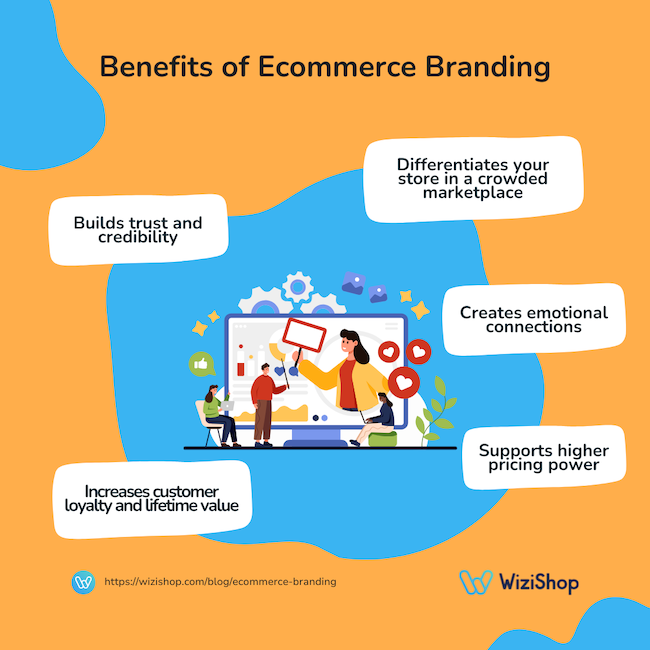
Builds trust and credibility
In ecommerce, customers cannot physically see or touch products, so confidence becomes a decisive factor.
A well-crafted, consistent brand using clear messaging, professional design, and reliable communication, helps reassure consumers that the business is legitimate and dependable. This confidence directly impacts conversion rates and repeat purchases.
Differentiates your store in a crowded marketplace
With millions of digital stores competing for attention, branding gives a company a distinctive voice and personality.
Whether through visuals, tone, or storytelling, a clear brand identity makes it easier for shoppers to remember and choose your store over generic competitors.
Creates emotional connections
Consumers often buy from brands that reflect their values, aspirations, or lifestyle.
By communicating a compelling brand story and personality, ecommerce businesses can create emotional resonance, which leads to stronger loyalty and word-of-mouth marketing.
Increases customer loyalty and lifetime value
Well-branded ecommerce stores give shoppers a reason to come back. When customers feel aligned with a brand and consistently have positive experiences, they develop loyalty.
Loyal customers not only buy more often but also become advocates, reducing marketing costs over time.
Supports higher pricing power
A trusted, recognizable brand can command premium prices.
Customers are more willing to pay extra for products from brands they perceive as high-quality or aligned with their identity. This improves margins and helps the venture grow sustainably.
Best practices for ecommerce branding
If you want to give your digital commerce store the greatest chance of success, it’s a good idea to follow these key best practices for effective ecommerce branding.
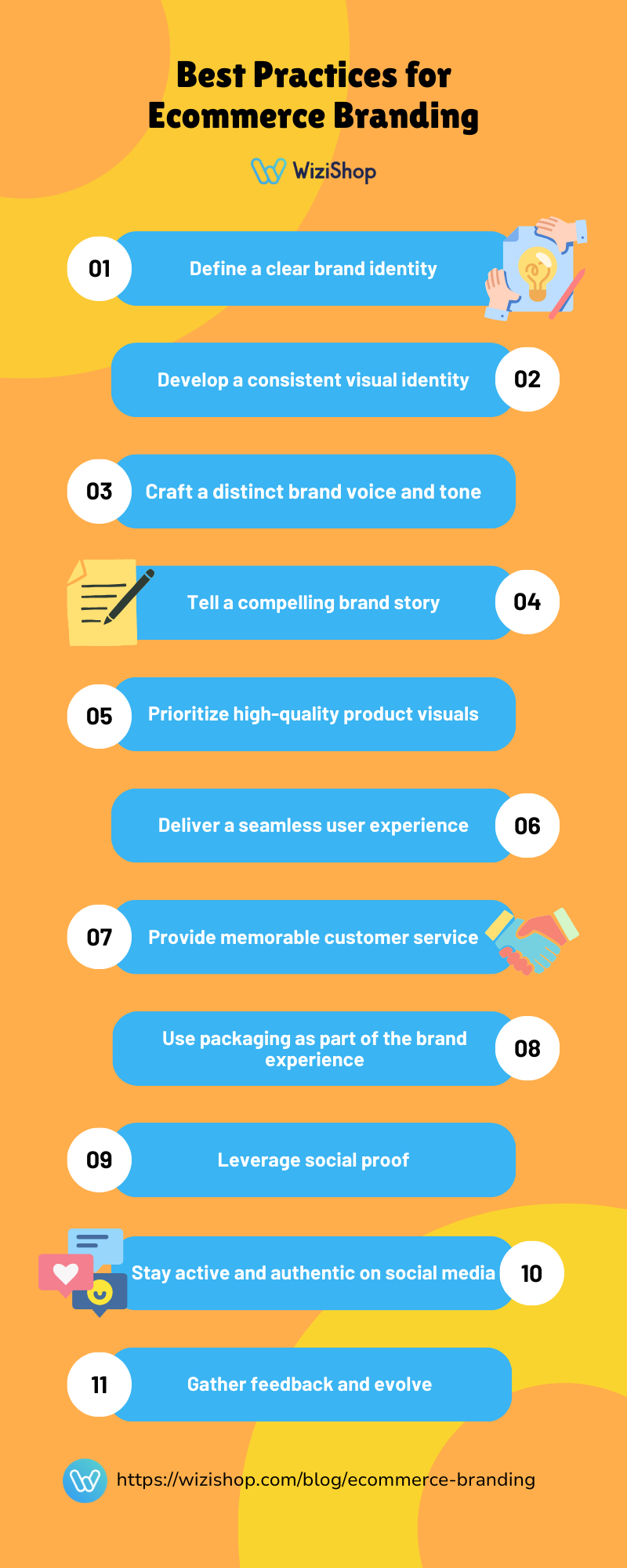
- Define a clear brand identity: Start with your mission, values, target buyers, and unique selling proposition. A strong brand begins with knowing who you are and what makes your store different.
- Develop a consistent visual identity: Use a unified color palette, typography, logo style, and imagery across your website, packaging, ads, and social media. Uniformity builds recognition and trust.
- Craft a distinct brand voice and tone: Decide how your brand speaks—friendly, expert, playful, minimalist, etc.—and apply it consistently in product descriptions, emails, customer support, and social posts.
- Tell a compelling brand story: Share why your business exists, what you stand for, and the problem you solve. Storytelling adds emotional depth and helps customers connect with your brand on a personal level.
- Prioritize high-quality product visuals: Clear, well-lit images and videos greatly impact confidence and conversions. Show products from multiple angles, in context, and in use when possible.
- Deliver a seamless user experience: Your website should be fast, intuitive, and mobile-friendly. Smooth navigation, transparent pricing, and easy checkout reinforce your brand’s reliability.
- Provide memorable customer service: Friendly, responsive support humanizes your brand. Personalized messages, proactive assistance, and hassle-free returns build loyalty.
- Use packaging as part of the brand experience: Thoughtful packaging, inserts, and unboxing elements leave a solid impression and increase perceived value.
- Leverage social proof: Display reviews, testimonials, user-generated content (UGC), and influencer partnerships. Social proof strengthens your brand’s credibility.
- Stay active and authentic on social networks: Engage consistently with your followers. Share behind-the-scenes views, customer stories, and value-driven posts that reflect your brand’s personality.
- Gather feedback and evolve: Regularly ask for input from buyers and monitor analytics. Adjust your branding and messaging as your market and audience change.
How to create a successful ecommerce brand: 5-Step strategy
Step 1: Know your audience and market positioning
The first step in creating a successful ecommerce brand involves deeply understanding who your ideal customers are, what they need, and how your brand fits into the competitive landscape.
This means researching demographics, preferences, pain points, and shopping behaviors to tailor your messaging and offerings effectively.
Here are three key questions to ask when getting to know your audience and market positioning:
- Who exactly is my ideal customer, and what are their biggest needs or challenges?
- How do competitors position themselves, and what gaps or opportunities exist in the market?
- What unique value or experience can my brand offer that resonates strongly with my ideal buyers?
This step is important because without clear audience insight, your marketing efforts can miss the mark, wasting time and resources.
To do this well, start by gathering feedback from shoppers, analyzing competitors, and creating detailed buyer personas.
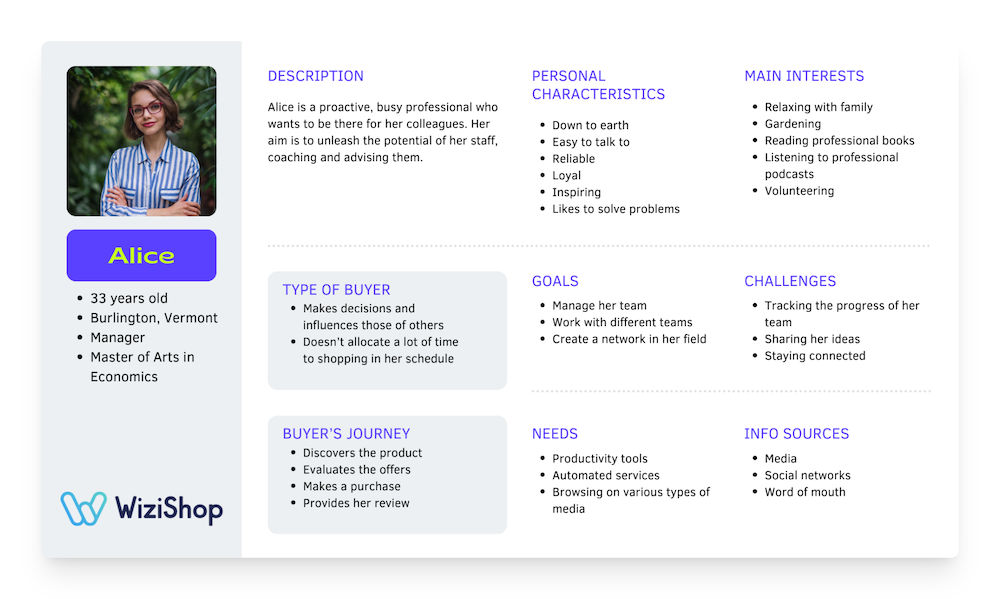
Example of a buyer persona
Remember to continuously refine your understanding as trends and preferences evolve, ensuring that your brand stays relevant and appealing.
Step 2: Choose a brand name and domain
Now you’re ready to think about what brand name and domain you want to use for your business—elements that will shape your first impression and online identity.
You will want to select a memorable, easy-to-pronounce, and relevant name that reflects your brand’s values and appeals to your target shoppers.
Equally important is securing a matching domain name that is simple, recognizable, and SEO-friendly to ensure customers can easily find your website.
Work on brainstorming creative names, being sure to check for trademark conflicts and verify domain availability early on.
You don’t want to invest a bunch of time and money in designing your website, creating branded merch, and perhaps even ordering business cards, only to find out that the name you have in mind is already taken by another company!

With WiziShop, you can take advantage of the platform’s artificial intelligence in your back office to generate ideas for your brand name, slogan, and more.
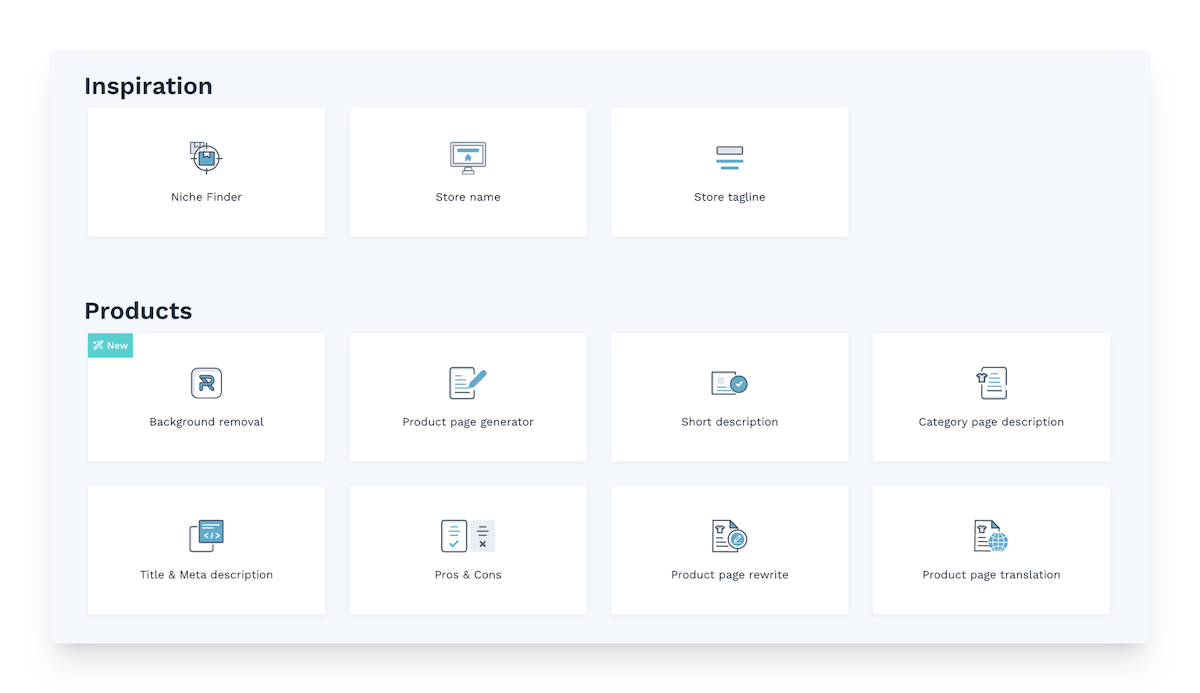
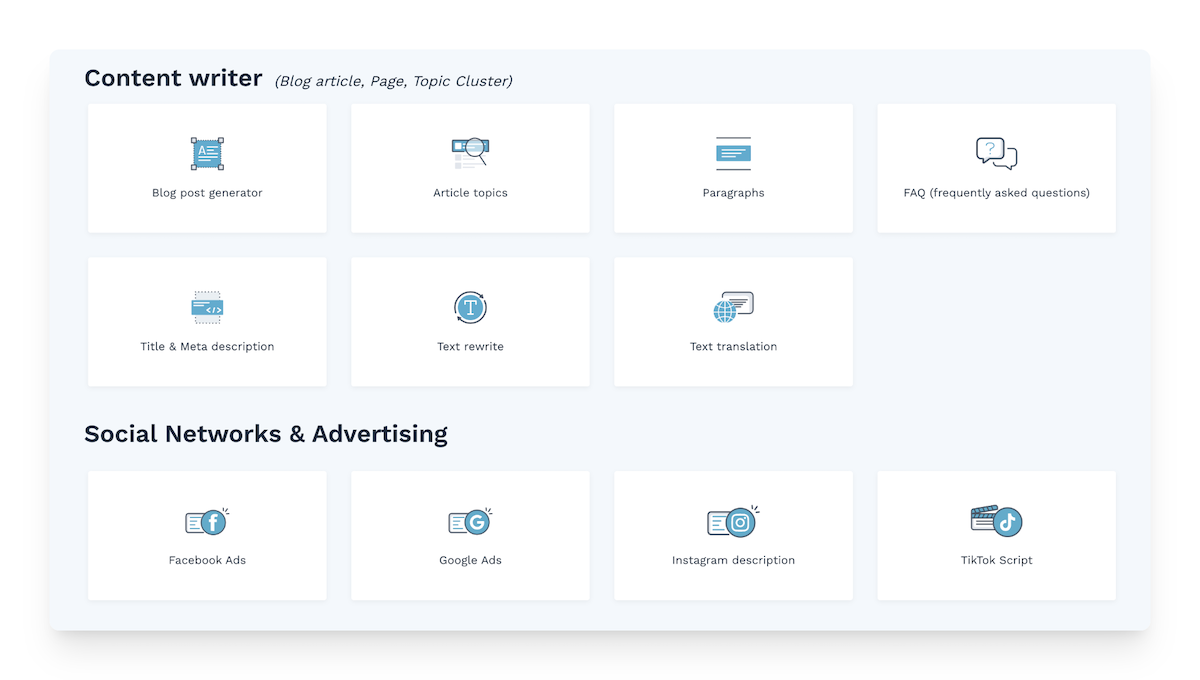
WiziShop AI features
Try WiziShop free for 7 days
THE EASIEST NO-CODE ECOMMERCE SOLUTION✅ No credit card required
✅ Access to all features
✅ No commitment
Step 3: Build your brand kit (logo, colors, fonts)
Building your brand kit is crucial for creating a cohesive and recognizable ecommerce brand identity.
Here, you will work on designing visual elements that reflect your brand’s personality and values while appealing to your target audience:
- The logo acts as the primary symbol of your brand.
- Colors evoke emotions and create consistency.
- Fonts set the tone for your communication style.
A high-quality brand kit ensures that all marketing materials, packaging, and digital assets look unified, strengthening confidence and professionalism.
To create an effective kit, begin by researching your audience’s preferences and competitors’ visuals, then choose a color palette that aligns with your brand’s mood.
Select fonts that are clear and versatile, and invest in a simple yet distinctive logo.
And if you feel like your design skills leave something to be desired, fear not! Sites like Looka and Canva offer tools to assist you in crafting your company’s brand kit.

Source: Canva
Step 4: Apply your branding elements consistently across your ecommerce site
Once you have all your branding elements in place, the next step entails using your logo, colors, fonts, and overall style uniformly on every page and touchpoint associated with your online store, including product pages, checkout, emails, and ads.
By doing so, you increase the likelihood of providing a seamless, professional experience that reinforces your brand identity and builds consumer confidence.
For example, take a look at the coherence in branding elements displayed on pet-supply company Chewy’s website, in their emails, and on their social media.
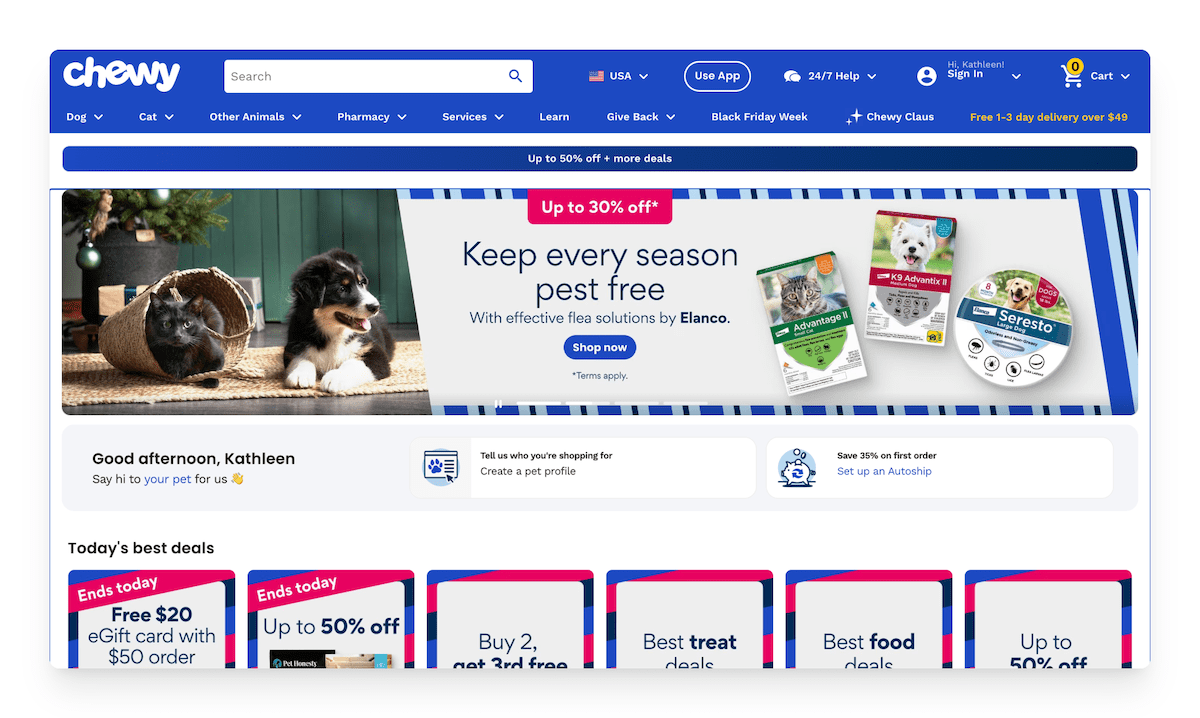
Homepage of the Chewy website
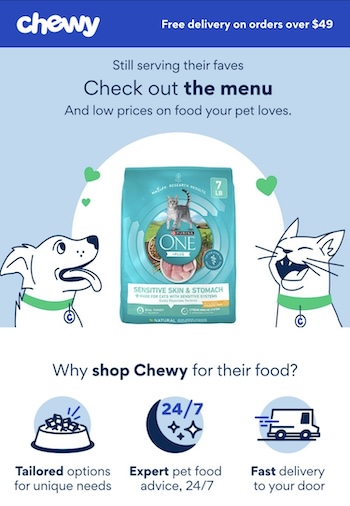

Email from Chewy

Chewy on Instagram
Consistency makes your brand instantly recognizable, helps differentiate you from competitors, and creates an enduring emotional connection with shoppers.
Start by creating brand guidelines that specify how to use each element and share them with your team if you have one. It’s also advantageous to use templates for product listings and marketing materials to maintain uniformity.
Finally, don’t forget to regularly review your site to ensure updates or new content align with your branding, keeping the customer experience cohesive and memorable from start to finish.
Step 5: Grow brand trust through content, reviews, and service
For a new web commerce business, it can often take a while to generate regular sales.
To speed things up, you can work on increasing confidence in your brand by consistently showing reliability, expertise, and care in every interaction with your audience via content, reviews, and service.
Aim to craft helpful, creative content that answers consumers’ questions, showcasing authentic reviews to provide social proof, and delivering responsive, empathetic customer support.
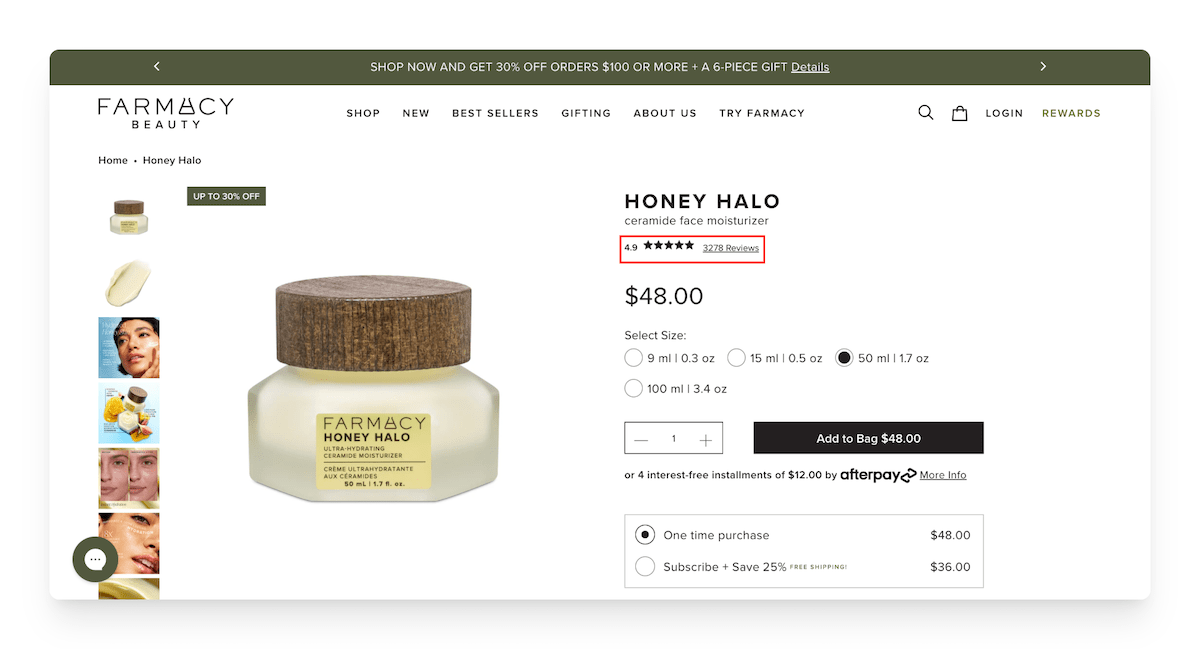
Farmacy Beauty displaying reviews for all products
Trust is vital because shoppers can’t physically experience your products on the web, so they rely on signals of credibility before making a purchase.
Put yourself in the consumer’s shoes for a minute.
Given the choice of buying a product from a brand that only has a few reviews and doesn’t have much of a presence on social media and a brand that has lots of positive reviews, including a decent number from recent shopping experiences, and frequently shares interesting, valuable posts on numerous social networks, which would you pick?
The latter, I’d assume!
It’s therefore advantageous to publish educational blog articles or videos, encourage satisfied customers to leave reviews, and respond professionally to both positive and negative feedback.
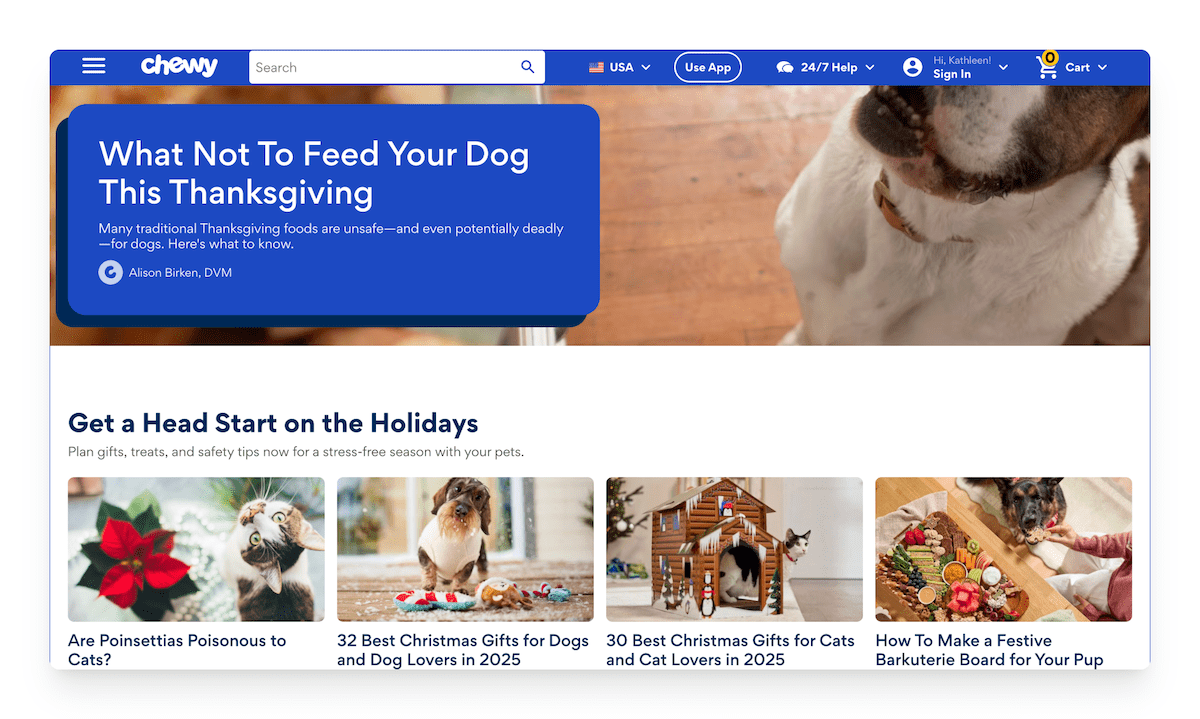
Educational articles on the Chewy site
In addition, be sure to prioritize fast, friendly service, and be transparent about policies and updates.
These habits reinforce reliability and help customers feel confident choosing your brand.
Examples of ecommerce branding
Warby Parker
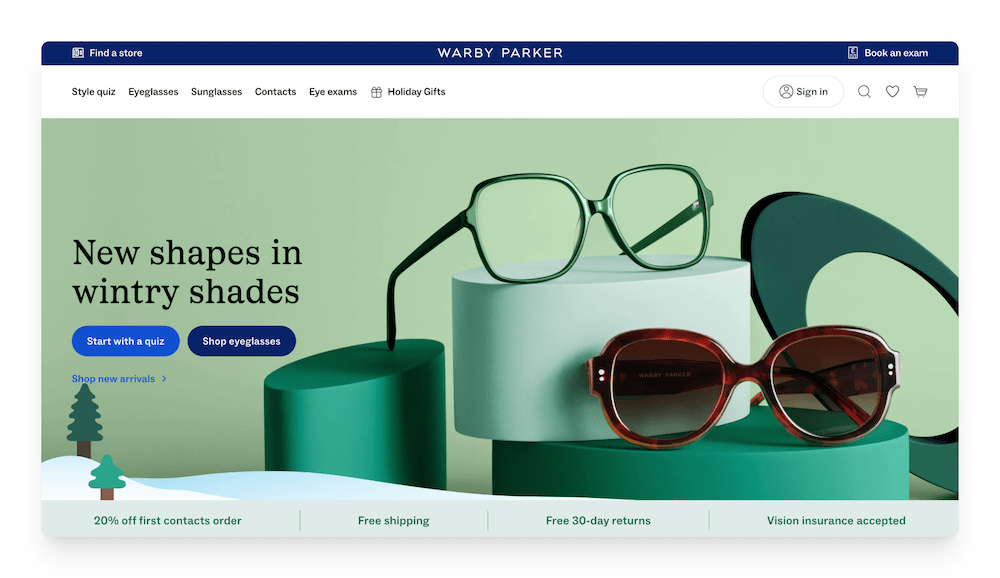
Warby Parker blends stylish, affordable eyewear with a clear, socially driven mission.
Its website and app deliver a clean, dependable visual identity and a streamlined shopping experience.
Warby Parker also uses digital tools (like virtual try-on and an AI style-advisor) and physical stores, merging online ease with offline trust.
When coupled with transparent pricing and charitable giving, this helps strengthen brand loyalty, trust, and modern-day appeal.
Herbivore Botanicals
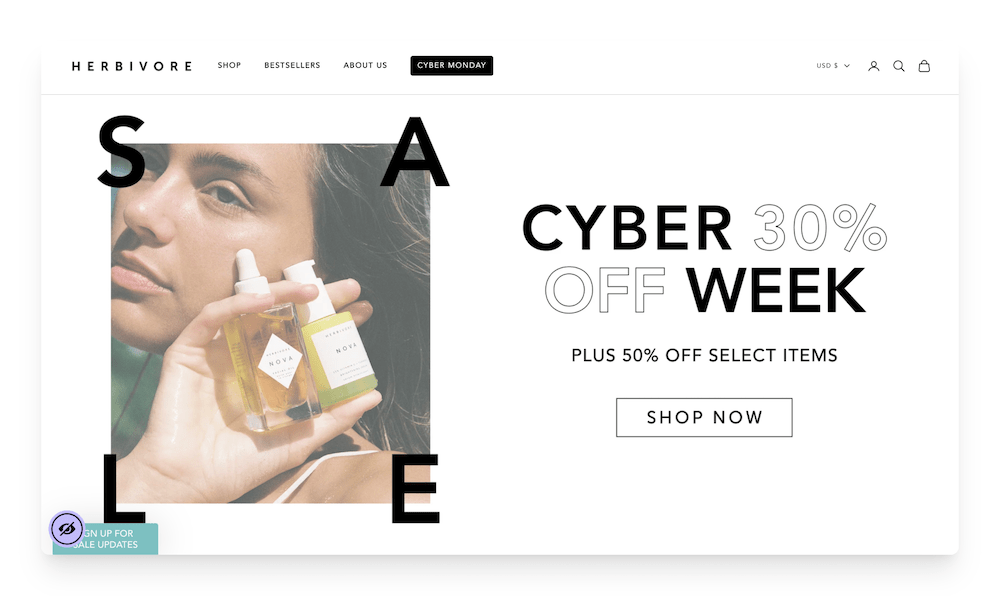
Herbivore Botanicals successfully merges product values, design, and storytelling to build a strong, coherent identity, differentiating itself from the start with its clean, plant-based, and vegan skincare philosophy, avoiding synthetic chemicals, parabens, and animal testing.
Its packaging is minimal and elegant (glass bottles, simple labels), reinforcing a natural, sophisticated, and modern aesthetic, which works especially well in digital stores where first impressions matter.
In addition, its brand story—a small, kitchen-based startup that grew via genuine community buzz (beginning on marketplaces like Etsy)—feels personal and relatable, helping customers trust and connect emotionally.
Its website’s clear structure, ingredient transparency, and easy-to-navigate shop aid in making purchasing on the internet simple… All key traits of effective ecommerce branding!
Gymshark
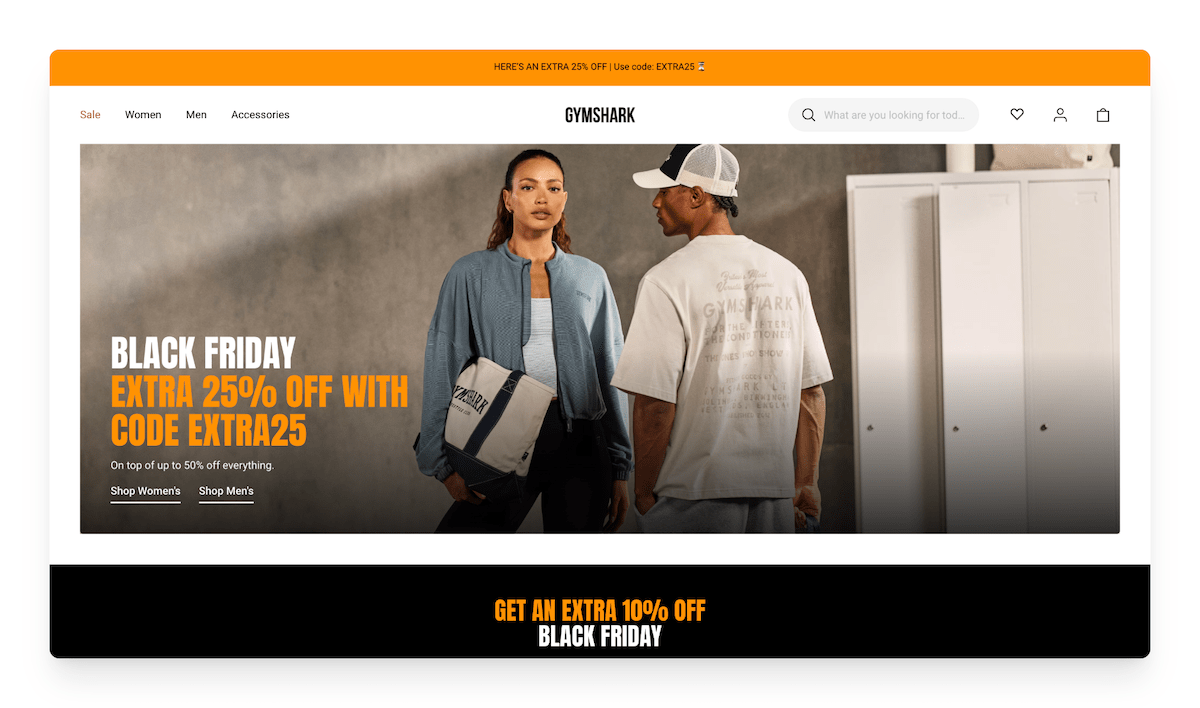
Another excellent example of ecommerce branding, Gymshark grew through influencer partnerships, bold visual identity, and a strong fitness-focused community.
From its origins sewing gym wear in a garage, the company embraced a digital-first, direct-to-consumer (D2C) model, giving it full control over branding, pricing, and customer experiences.
Rather than traditional ads, Gymshark harnessed social media influencers and UGC to build authenticity and trust.
Its frequent product drops, limited editions, and community-driven marketing created hype and a sense of belonging among gym-goers.
Final thoughts
Effective ecommerce branding helps businesses differentiate themselves, attract repeat customers, and foster lasting loyalty in a competitive online market.
By developing a clear identity, maintaining consistency, and building emotional connections with shoppers, brands can turn occasional buyers into dedicated advocates.
Whether you’re a startup or an established company, investing in your web commerce brand creates a foundation for sustainable growth and deeper customer relationships.
Great branding ultimately makes shopping memorable and meaningful!
FAQ
Can I build a strong brand without design skills?
Yes! While design skills help, you can still create a solid brand by focusing on clear messaging, unchanging values, and leveraging accessible design tools or collaborators to handle the visuals.
Can I build a strong brand without design skills?
Building brand recognition typically takes several months to a few years, depending on consistency, audience size, and marketing effort.
How do I know if my branding strategy is effective?
You’ll know your branding efforts are paying off when you see growing audience recognition, regular engagement, and measurable improvements in metrics like traffic, conversions, and customer loyalty.