


Key points in this article:
- Many of the leading platforms offer vast product ranges, selling everything from electronics to clothing and even vehicles.
- Platforms such as eBay and Walmart Markeplace allow businesses to access large customer bases.
- Features like home delivery and in-store pickup improve convenience and customer experience.
- The top sites use secure payments, encryption, and fraud protection to ensure safe transactions and customer confidence.
- Some successful ecommerce sites have started using AI to recommend products, tailor content, and enhance customer support.
Consumers are increasingly heading online to fulfill their shopping wants and needs. The dramatic growth in the ecommerce industry presents entrepreneurs with many great opportunities to connect with shoppers by creating online stores.
Your ecommerce business can benefit from affordable marketing options, convenient access to a global customer base, and even enhanced online security. These and other advantages help make it relatively easy to launch an online store and grow an ecommerce business.
With numerous ecommerce websites dominating the market around the world, a closer look at the industry leaders in digital commerce is in order. This will help you to learn from these platforms’ efforts and strategies for your own ecommerce store’s benefit.
Let’s examine some of the most powerful players in online selling in terms of site traffic, revenue, and more.
These are among the top ecommerce sites that you may want to get familiar with as you search for great ways to help you get your products in front of potential customers.
1. Amazon
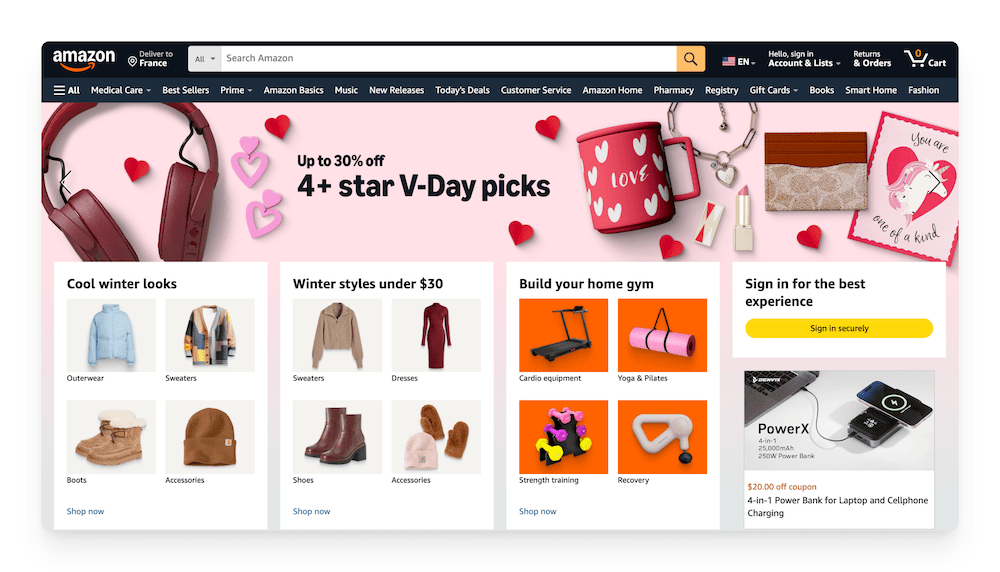
Amazon’s history tells the tale of how even the smallest home-based businesses can expand epically in the ecommerce industry.
This website launched in 1994 as an online bookstore, and its product offerings rapidly grew to meet the needs of its customers, generating $716.92 billion in revenue in 2025, as reported by Statista.
Its site is easy to search to find goods of all kinds, providing an enjoyable shopping experience for users. Furthermore, the site offers free 2-day shipping for its Amazon Prime members and free standard shipping for orders of a minimum purchase amount.
In January 2026, amazon.com had 2.47 billion visitors, according to Semrush.
Amazon has a history of expanding to fill shoppers’ needs by buying out competitors, tapping into niches that it identified, and taking other significant steps.
While its roots are in book sales, Amazon’s product catalog now features everything from sewing supplies and dog toys to furniture, clothes, tools, and more through its website and mobile app.
The platform also has numerous subsidiaries that include Whole Foods, Goodreads, Twitch, and others.
In addition, there’s Amazon’s Amazon Web Services (AWS), which is the company’s cloud computing division that provides on-demand infrastructure, storage, and software services to businesses, generating a significant share of the company’s profits.
Finally, Amazon is also one of the largest ecommerce sites that small-business owners can use to list their store’s products for sale and to connect with customers around the world.
Key facts
Founder
Jeff Bezos
Year founded
1994
Monthly visitors
2.47 Billion
Ecommerce revenue
$716.92 Billion (2025)
Product categories
Electronics, Books, Clothing & Accessories, Home & Kitchen, Cloud Computing (AWS), Digital Streaming, Grocery
2. Walmart.com
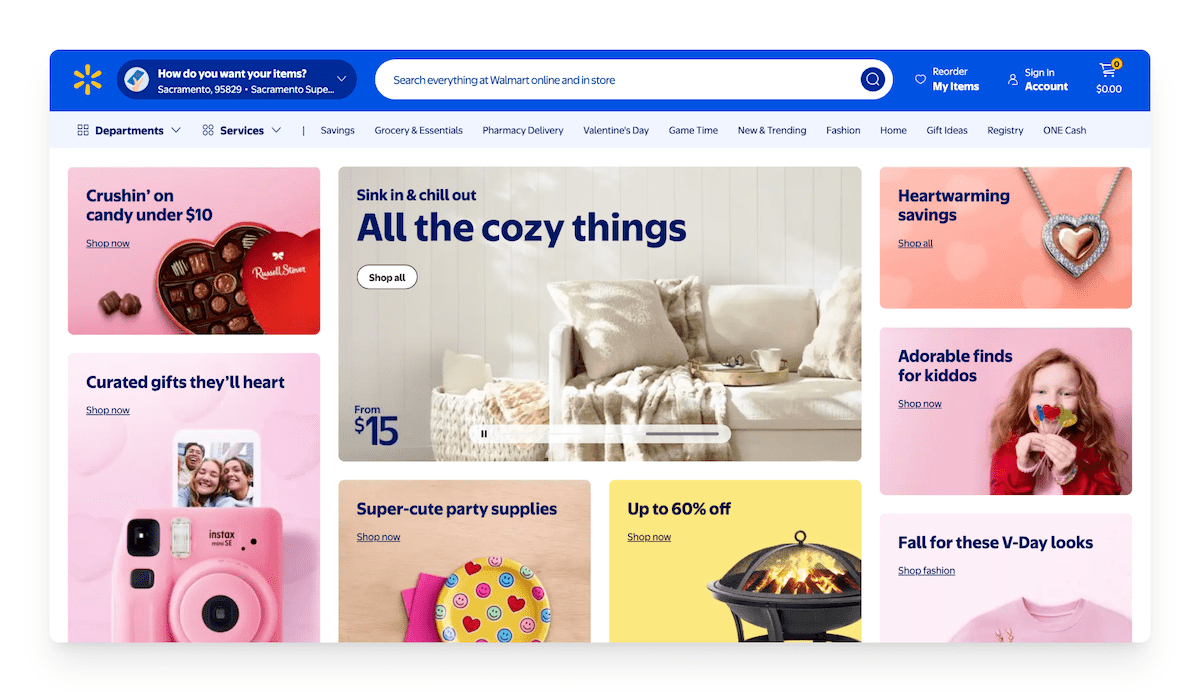
Walmart was founded in 1962 by brothers Sam Walton and James Walton, with the company website launching in 2000.
While many shoppers visit Walmart brick-and-mortar stores close to home, others take advantage of the convenience of online shopping through this retail giant’s website.
Semrush reports that the company’s website saw 503.93 million visitors in January 2026.
Unlike Amazon, Walmart’s products are most heavily sold in North American countries, including Canada, Mexico, and the United States.
Walmart sells groceries, furnishings, home décor, clothing, seasonal items, toys, and more.
A customer shopping on Walmart’s website can choose to pick up their purchased items at their local store or enjoy the convenience of home delivery.
Walmart’s diverse product line makes it a go-to digital commerce store because it often serves as a one-stop shop for most needs.
Smaller businesses can tap into Walmart’s expansive reach by listing their store’s products through Walmart Marketplace.
According to Statista, Walmart U.S. ecommerce sales amounted to $79.3 billion in 2025. When combined with the company’s International and Sam’s Club divisions, ecommerce sales reached $120 billion in total.
Key facts
Founders
Sam Walton and James Walton
Year founded
1962 (physical store); 2000 (website)
Monthly visitors
503.93 Million
Ecommerce revenue
$79.3 Billion (2025)
Product categories
Electronics, Books, Clothing, Pharmacy, Home & Kitchen, Grocery, Pets, Beauty
3. eBay.com
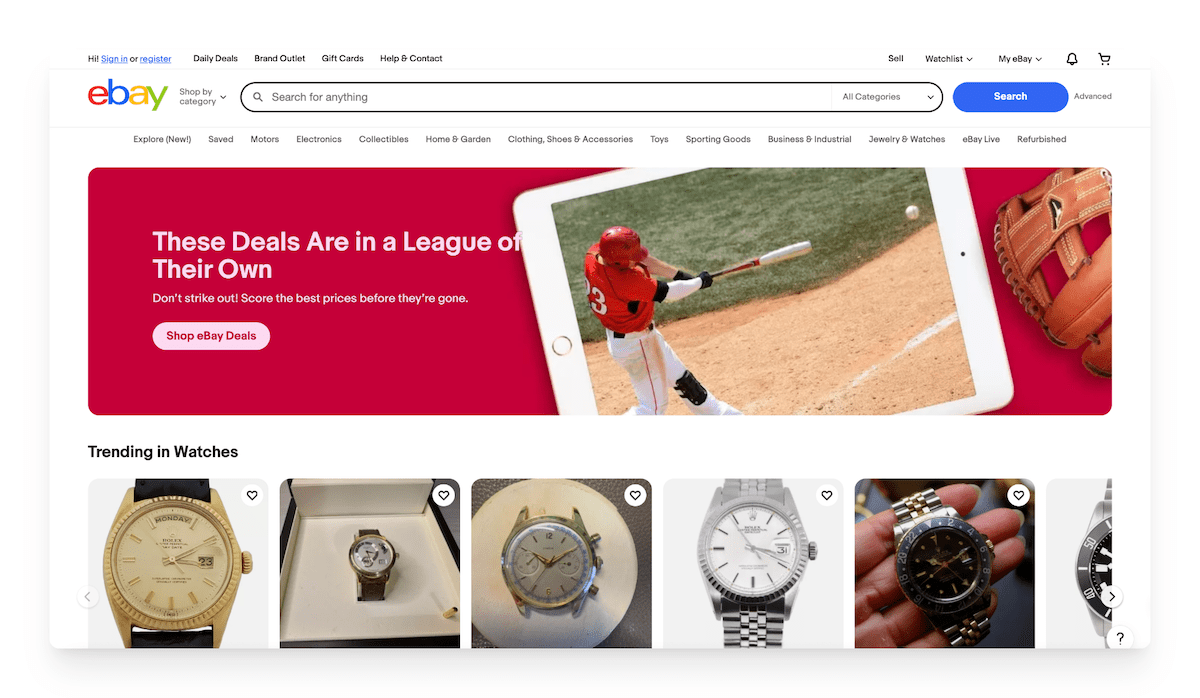
Another one of the best-known names in the ecommerce industry is eBay, founded by Pierre Omidyar, with a website that launched in 1995.
The company’s website features a unique auction-style platform design that enables individuals as well as businesses to connect with a huge base of customers.
Sales take place either through online auctions or “buy it now” instant purchases, with the company charging sellers a commission on each completed sale.
It sells everything from pre-owned and new apparel to toys, sporting goods, and even vehicles, generating $10.71 billion in revenue in 2025, according to CompaniesMarketCap.
During the month of January 2026, ebay.com received 534.22 million visits from online shoppers, based on Semrush data.
For smaller ecommerce businesses that need to get products in front of a larger pool of potential customers, eBay is a smart option to consider.
Key facts
Founder
Pierre Omidyar
Year founded
1995
Monthly visitors
534.22 Million
Ecommerce revenue
$10.71 Billion (2025)
Product categories
Vehicles & Vehicle Accessories, Electronics, Collectibles, Clothing, Home & Garden, Toys, Jewelry
4. Target
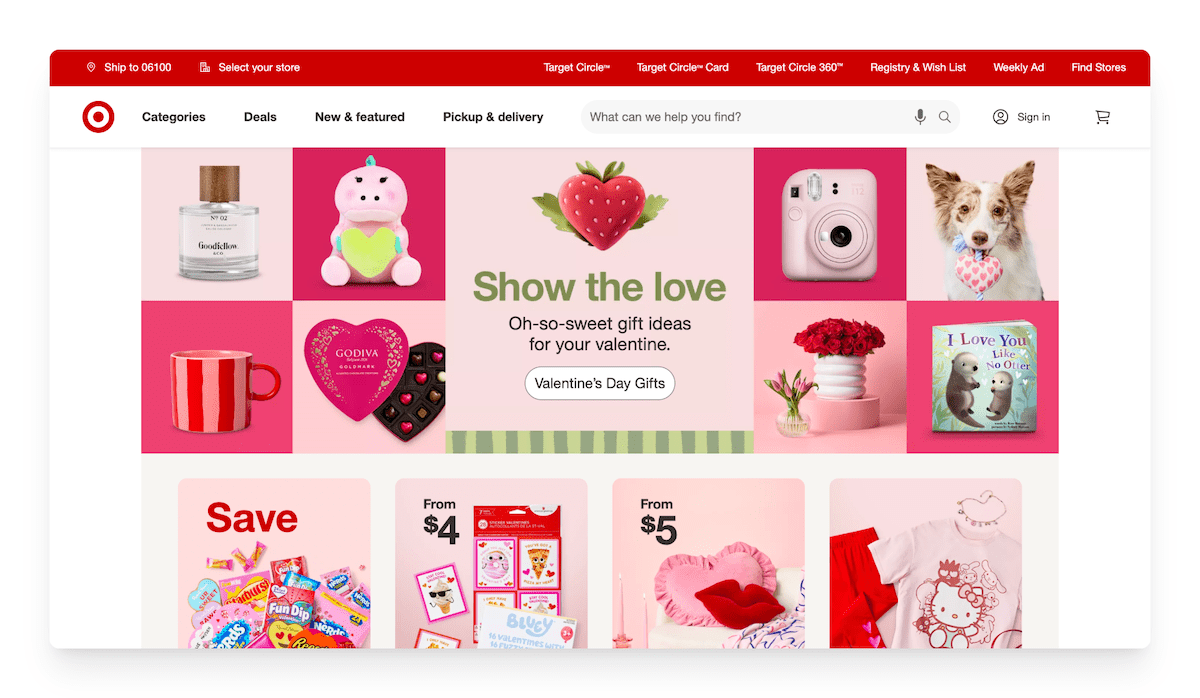
In 1962, John Geisse and Douglas Dayton established and opened the first Target stores.
Like Walmart, Target has stores in many locations throughout the US that customers can shop in directly. This company also has an extensive ecommerce site, launched in 1999, that enables people to conveniently shop online.
Target provides free shipping for online purchases, and it also offers in-store pickup as a faster alternative to further help provide a top-notch shopping experience.
Semrush states that target.com’s monthly traffic volume consisted of 174.91 million visitors in January 2026. It sells clothing, décor, toys, electronics, and other items, and it’s known for its many promotions and discounts.
According to ECDB, Target’s ecommerce revenue reached approximately $22.86 billion in 2024.
Similar to Walmart, small-business owners can list their products on the company’s marketplace, Target+ (plus). However, this marketplace channel is currently only available to third-party retailers by invitation only.
Key facts
Founders
John Geisse and Douglas Dayton
Year founded
1962 (physical store); 1999 (website)
Monthly visitors
174.91 Million
Ecommerce revenue
$22.86 Billion (2024)
Product categories
Clothing, Home & Dining, Grocery, Furniture, Toys, Electronics, Movies, Music, Books, Pets, Sports & Outdoors
5. AliExpress.com
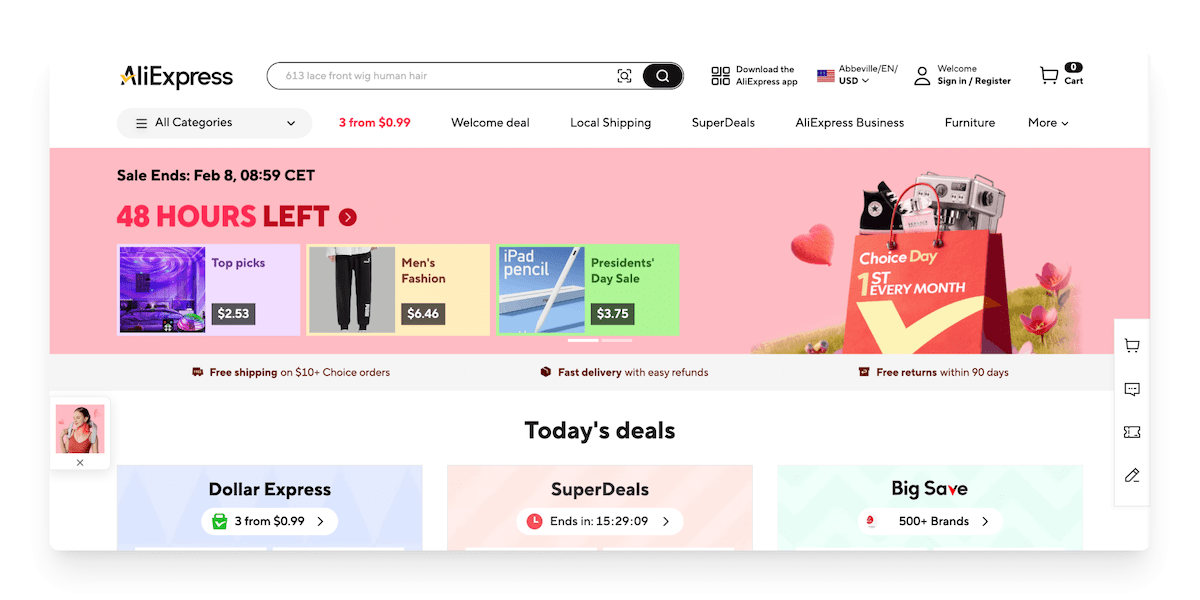
Alibaba is a China-based ecommerce giant, founded by Jack Ma, that dominates the industry throughout Asian countries and beyond.
It’s known for connecting suppliers and manufacturers with direct buyers and resellers.
Alibaba’s online retail branch for B2C sales is aliexpress.com, and this platform received 705.86 million visitors in January 2026, as reported by Semrush.
Launched in 2010, the AliExpress website offers a vast range of products, including electronics, fashion, home goods, beauty products, toys, and more—mostly from Chinese manufacturers—generating $102.7 billion in revenue in 2025, according to Alibaba.
It’s a marketplace site where sellers list items at competitive prices, often cheaper than Amazon.
However, shipping times can be much longer since many products come directly from China. Unlike Amazon, AliExpress does not have a centralized fulfillment network like Amazon Prime for fast shipping.
Key facts
Founder
Jack Ma
Year founded
2010
Monthly visitors
705.86 Million
Ecommerce revenue
$102.7 Billion (2025)
Product categories
Clothing, Jewelry & Watches, Automotive & Motorcycle, Sports & Entertainment, Computer, Home & Garden
6. Flipkart.com
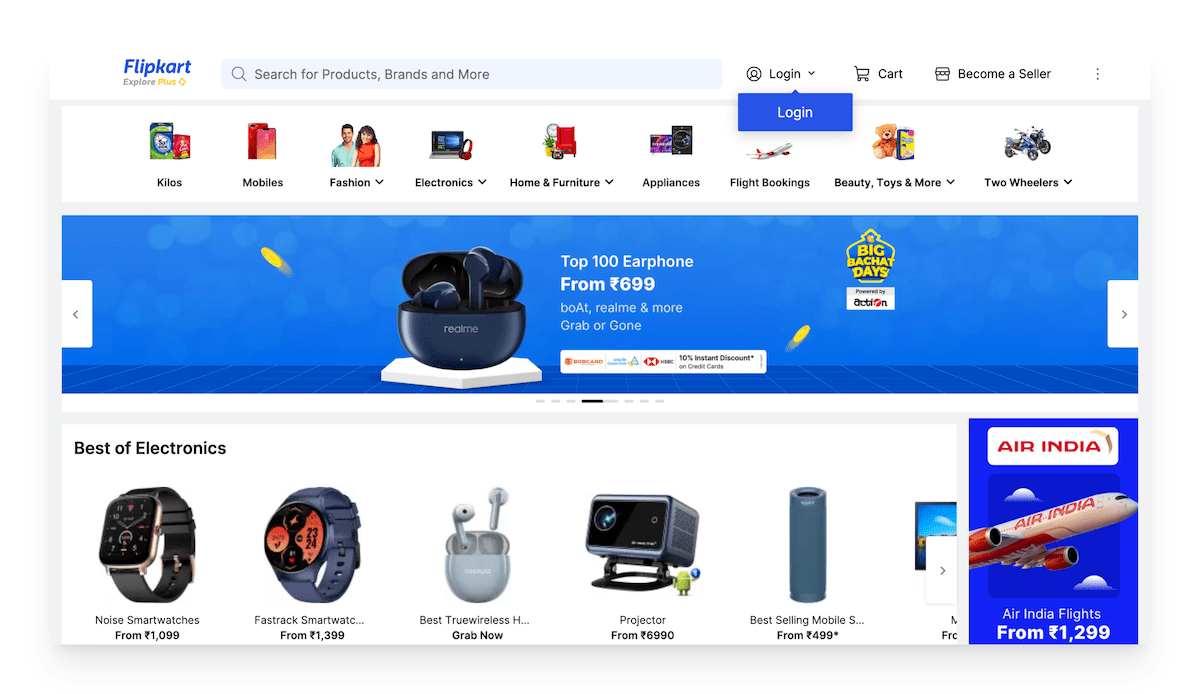
Founded by Sachin Bansal and Binny Bansal in 2007, the Flipkart ecommerce website saw 163.48 million visitors in January 2026, according to Semrush data.
While it serves consumers in many countries, this India-based company is most popular with shoppers in India and in other Asian countries.
Like Amazon, Flipkart was started as an online bookstore. It gradually began selling an increasingly diverse range of products to serve its customers’ various needs.
Today, the company’s product offerings include electronics, lifestyle items, home goods, clothing, and other goods, bringing in $9.8 billion in revenue in 2025, according to Wikipedia.
Flipkart shoppers benefit from the ability to easily learn about merchandise for sale by reading a short description. In addition, many items are listed with comments from real customers so that shoppers can make an informed selection.
With affordable prices and fast delivery, Flipkart can be particularly beneficial to ecommerce businesses looking to connect with consumers all throughout Asia to increase their sales.
Key facts
Founders
Sachin Bansal and Binny Bansal
Year founded
2007
Monthly visitors
163.48 Million
Ecommerce revenue
$9.8 Billion (2025)
Product categories
Fashion, Travel, Food & Health, Electronics, Home & Kitchen, Appliances, Beauty, Sports, Mobile Devices
7. Newegg.com
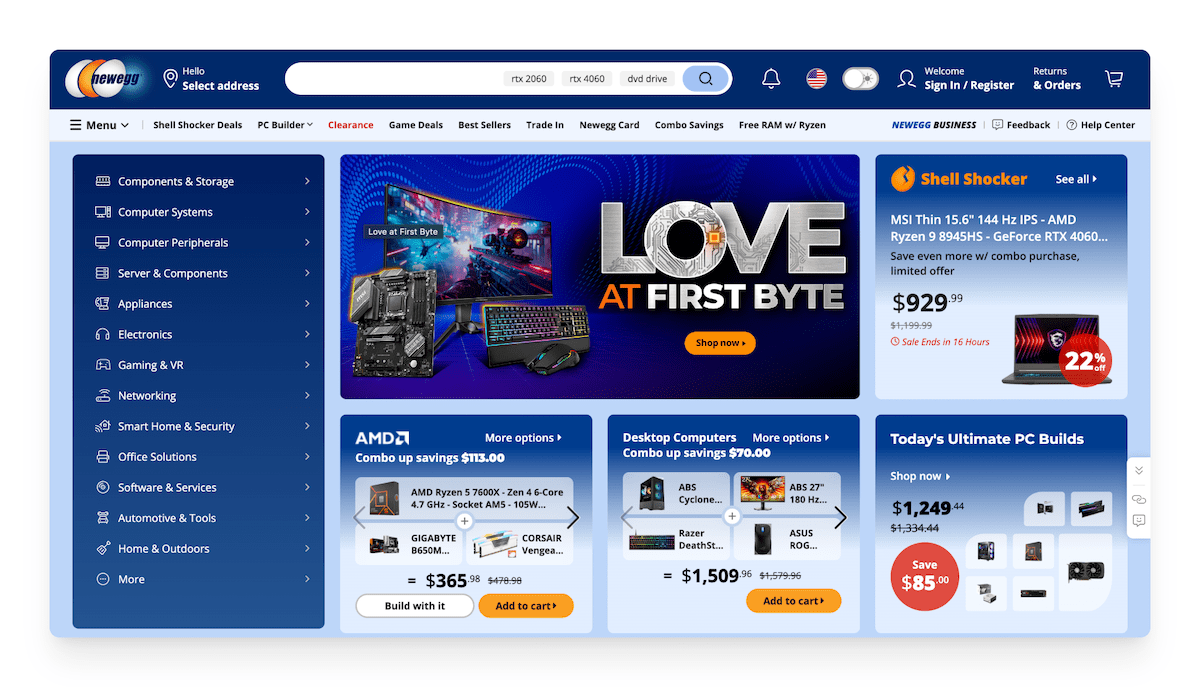
Newegg, founded in 2001 by Fred Chang, serves a more refined niche than ecommerce giants like Amazon, eBay, Walmart, and others, with revenue earnings of $1.23 billion in 2024, based on CompaniesMarketCap data.
The online store’s primary customer base is shoppers who are interested in technology and tech-related products.
This company’s loyal following and its product list that includes more than 3 million tech-related products are among the primary reasons why it’s one of the top ecommerce sites on the web today, with Semrush reporting the website bringing in 22.91 million visitors in December 2025.
Its many items for sale include tablets, laptops, development software, audio and video software, and other items.
Through the Newegg Marketplace, both smaller and larger retailers can list their products on the Newegg website. By doing so, they can tap into a huge, engaged base of potential customers.
Key facts
Founder
Fred Chang
Year founded
2001
Monthly visitors
22.91 Million
Ecommerce revenue
$1.23 Billion (2024)
Product categories
Appliances, Electronics, Computer Systems, Smart Home & Security, Gaming & VR, Automotive & Tools
8. Temu.com

Temu is one of the newer ecommerce sites on this list, but it’s already made a name for itself connecting consumers directly with manufacturers, brands, and sellers worldwide, bringing in $53.9 billion in revenue in 2024, based on ECDB data.
Founded in 2022 by Colin Huang, the global ecommerce platform’s model focuses on cutting out middlemen to offer affordable products shipped through global logistics networks.
The temu.com site, receiving 1.45 billion visits in December 2025, according to Semrush, provides millions of items across many categories via both direct-from-manufacturer and local seller marketplaces.
Temu has become a top ecommerce site due to its wide selection, low prices, strong supply chain, and technology-driven shopping experience, which together make products more accessible and appealing to a global audience.
Key facts
Founder
Colin Huang
Year founded
2022
Monthly visitors
1.45 Billion
Ecommerce revenue
$53.9 Billion (2024)
Product categories
Home & Kitchen, Clothing, Sports & Outdoors, Automotive, Toys & Games, Jewelry & Accessories, Beauty & Health
9. BestBuy.com
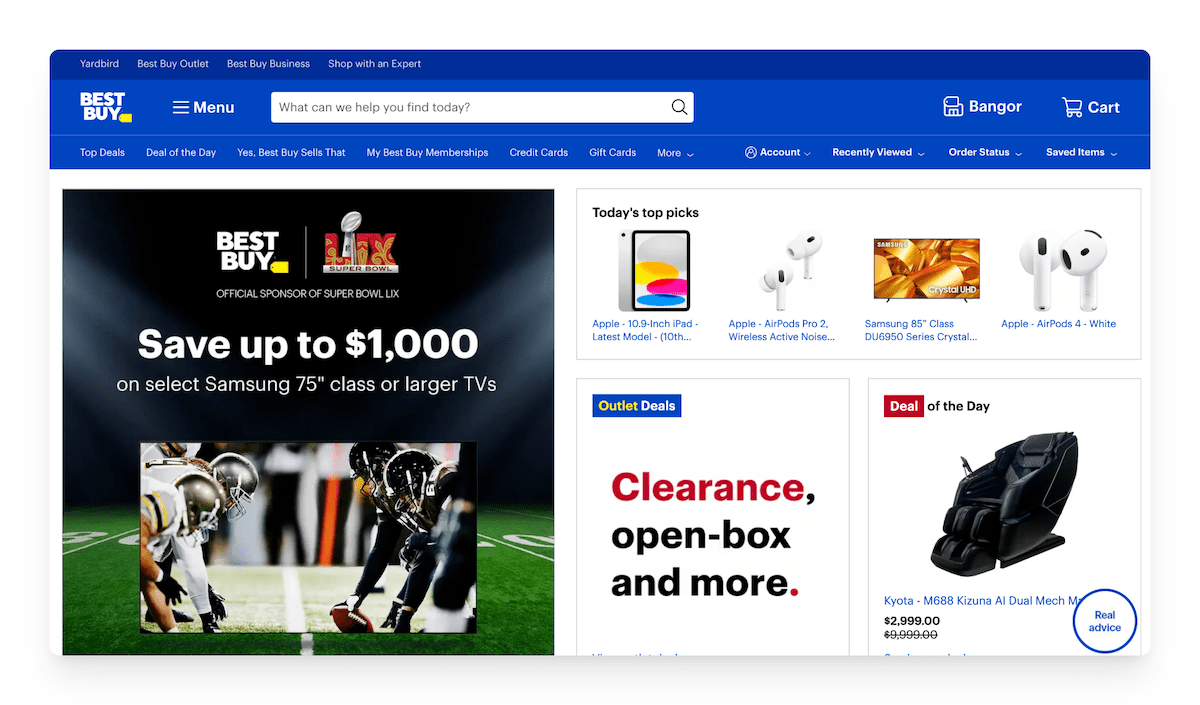
Best Buy, originally known as Sound of Music when founded in 1966 by Richard M. Schulze and James Wheeler, is a leader in its niche, and it features a robust range of products both in its many retail store locations and through its ecommerce website (launched in 1997).
It’s best known as an electronics store because it sells computers and related products, televisions, gaming systems, and other tech-related items.
It also has appliances, audio and video products, mobile phones and related products, car audio equipment, and more. Best Buy additionally has a mobile app and notably offers installation and repair services for some of its products.
While Best Buy is unique in that it’s one of the few ecommerce giants that specializes in a niche, its website receives significant traffic, with 107.41 million visitors in January 2026, according to Semrush.
This makes it among the top ecommerce stores in the United States today, with Statista reporting online revenue earnings of $12.99 billion for the business for FY 2025.
In addition, online sellers can now start selling their electronics and related products on Best Buy’s new third-party marketplace, launched in 2025.
Key facts
Founders
Richard M. Schulze and James Wheeler
Year founded
1966 (physical store); 1997 (website)
Monthly visitors
107.41 Million
Ecommerce revenue
$12.99 Billion (FY 2025)
Product categories
TV & Home Theater, Computers & Tablets, Appliances, Video Games, Cell Phones, Home Audio & Speakers, Music, Movies
10. JD.com

Based out of Beijing, JD.com, also known as Jingdong, is one of the biggest rivals of the previously mentioned ecommerce dominant player, Alibaba.
The business was created in 1998 by Liu Qiangdong and has a vast array of goods for sale: electronics, appliances, clothing, food and groceries, health and beauty items, pet supplies, and more.
Using Semrush data, Jingdong’s ecommerce website had 23.01 million visitors in December 2025.
The company, which CompaniesMarketsCap reports generated $160.77 million in revenue in 2024, is especially well known for technologically advanced delivery services, using drones to deliver products to customers.
Key facts
Founder
Liu Qiangdong
Year founded
1998
Monthly visitors
23.01 Million
Ecommerce revenue
$160.77 Million (2024)
Product categories
Clothing, Beauty & Personal Care, Food & Groceries, Pet supplies, Health, Sports & Outdoors, Home
11. Etsy.com
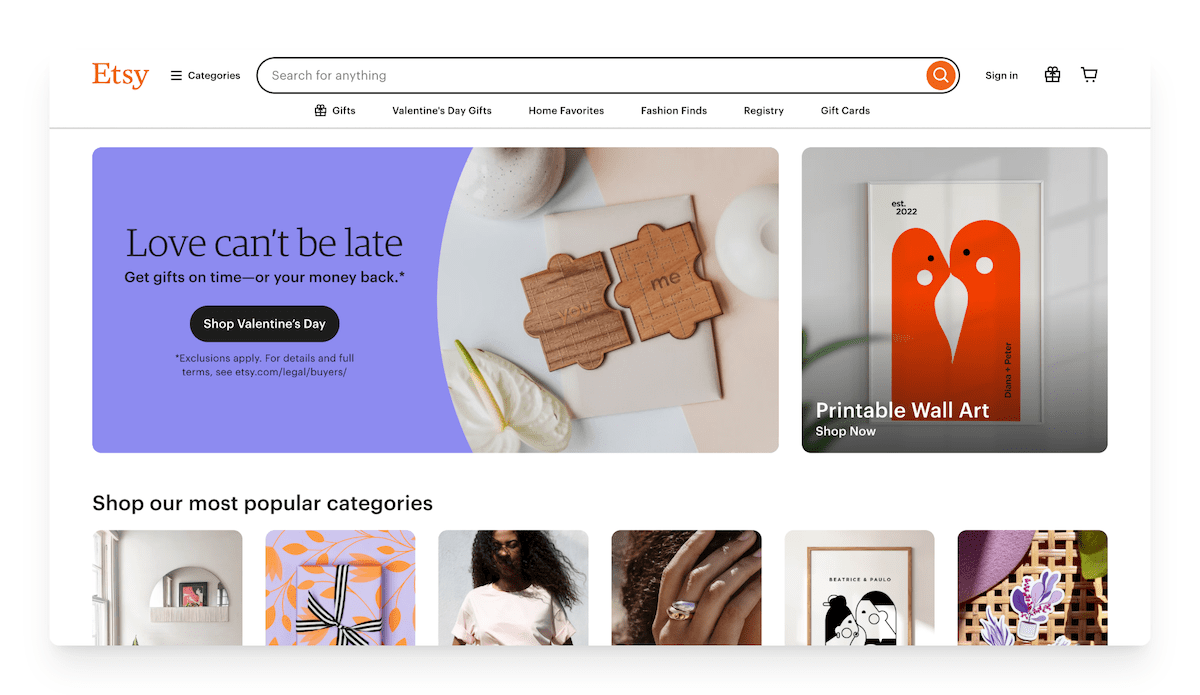
Etsy is known for its unique products that are mostly handmade or crafted by smaller artisans.
Its products include everything from candles and soaps to holiday décor, clothing, and more, with $2.8 billion in revenue generated in 2024, based on Business of Apps data.
Founded in 2005 by Rob Kalin, Jared Tarbell, Haim Schoppik, and Chris Maguire, the site received approximately 395.03 million visitors in January 2026, according to Semrush, and easily makes its way to the center of the list of top ecommerce sites serving a worldwide base of customers.
Unlike other ecommerce giants that sell their own products or that resell products from major brands, Etsy is a marketplace specifically for smaller businesses and individuals to use.
Because of how easy it is for crafters and others to create an Etsy store and to start reaching customers, it’s often an entryway into the world of ecommerce for many artisans.
Key facts
Founders
Rob Kalin, Jared Tarbell, Haim Schoppik, and Chris Maguire
Year founded
2005
Monthly visitors
395.03 Million
Ecommerce revenue
$2.8 Billion (2024)
Product categories
Jewelry & Accessories, Clothing & Shoes, Home & Living, Wedding & Party, Craft Supplies & Tools, Art & Collectibles
12. Rakuten.co.jp

Founded in 1997 by Hiroshi Mikitani, Rakuten is Japan’s largest ecommerce site, though it operates websites based in other countries as well, earning $15.03 billion in revenue in 2024, according to MacroTrends.
In addition to its online store, the company manages credit card payments, runs the country’s biggest online bank, offers food delivery and travel book services, and much more.
Often called the “Amazon of Japan,” Rakuten’s ecommerce website features a wide range of products, and the company employs over 30,000 people as of 2023, looking at Statista data.
Semrush reports that the Japanese site’s number of visitors per month in January 2026 was 338 million.
In October 2018, Rakuten partnered with Walmart to launch a grocery-delivery service in Japan. This platform allows customers to buy groceries online and get them delivered directly to their homes.
Key facts
Founder
Hiroshi Mikitani
Year founded
1997
Monthly visitors
338 Million
Ecommerce revenue
$15.03 Billion (2024)
Product categories
Fashion & Accessories, Book, Electronics, Appliances, Books, Video Games, Beauty, Sports, Mobile Phones, Computers & Software, Music
13. MercadoLivre.com.br

Mercadolivre.com.br, the Brazilian site for Mercado Libre, is the company’s most popular site, generating 50% of the total revenue for the business in 2024, amounting to $51.47 billion, according to ECDB.
Mercado Libre (or Mercado Livre in Brazil) was founded in 1999 by Marcos Galperin, Hernán J. Kazah, and Stelleo Passos Tolda in Argentina.
Inspired by eBay, it began as an online marketplace connecting buyers and sellers across Latin America.
Over time, it expanded rapidly into multiple countries and evolved into a comprehensive digital ecosystem.
Today, Mercado Libre offers ecommerce services, digital payments through Mercado Pago, logistics solutions, and financing options for users and businesses.
It is now the largest online commerce platform in Latin America, with Semrush reporting that merccadolivre.com.br alone received 195.13 million visits in January 2026, playing a major role in the region’s digital economy and enabling millions of transactions daily.
Key facts
Founders
Marcos Galperin, Hernán J. Kazah, and Stelleo Passos Tolda
Year founded
1999
Monthly visitors
195.13 Million
Ecommerce revenue
$51.47 Billion (2024)
Product categories
Electronics, Technology, Home & Appliances, Fashion & Accessories, Books, Art, Toys, Games, Sports, Agriculture & Industrial Goods